
Take action for endangered species
We don't collect donations: we point you to the people doing the work on the ground. Here are four practical ways anyone can help.
Choose an organization to support
Support a field organization
For each of the ten species, we have selected two trusted organizations working directly to protect it. The links take you to their own donation or symbolic adoption page: your money goes straight to them, with no middleman.
-
-
Adoptaxolotl (UNAM Institute of Biology)
Virtually adopt an axolotl or a refuge in Xochimilco, from about US$10. Funds go to canal restoration, local wildlife and chinampa farmers.
Symbolic adoption — Adoptaxolotl (UNAM Institute of Biology) (external site, opens in a new tab) -
Conservation International
Through its Mexico programme, supports the axolotl census and UNAM's chinampa-refuge model.
Donate — Conservation International (external site, opens in a new tab)
-
-
-
American Bird Conservancy
Supports the work of SAVE Brasil, BirdLife International's partner, to monitor and protect the blue-eyed ground dove and its reserve.
Donate — American Bird Conservancy (external site, opens in a new tab) -
Chester Zoo
Works with Parque das Aves and SAVE Brasil on the conservation breeding programme that produced chicks in 2023, 2024 and 2025.
Donate — Chester Zoo (external site, opens in a new tab)
-
-
-
Death Valley Natural History Association
Official partner of Death Valley National Park, which manages Devils Hole. Donations support park programmes and are not limited to the pupfish.
Donate — Death Valley Natural History Association (external site, opens in a new tab) -
Death Valley National Park
The park accepts donations directly and can direct them to specific programmes.
Donate — Death Valley National Park (external site, opens in a new tab)
-
-
-
Kadoorie Farm and Botanic Garden (KFBG)
This Hong Kong organisation has run the Hainan gibbon conservation programme since 2003: monitoring teams, patrols, censuses and reforestation.
Donate — Kadoorie Farm and Botanic Garden (KFBG) (external site, opens in a new tab) -
Zoological Society of London (ZSL)
Its scientists work with Chinese partners to reconnect the forest and to monitor gibbons by listening to their songs.
Donate — Zoological Society of London (ZSL) (external site, opens in a new tab)
-
-
-
International Rhino Foundation
Works with Indonesian partners to fund the Rhino Protection Units that patrol Ujung Kulon National Park.
Donate — International Rhino Foundation (external site, opens in a new tab) -
Save the Rhino International
Supports conservation programmes for all five rhino species, including the Javan rhino.
Donate — Save the Rhino International (external site, opens in a new tab)
-
-
-
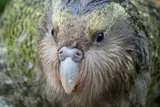
Kākāpō Recovery — symbolic adoption
Symbolically adopt a kākāpō for a year and receive a certificate and news about "your" bird. Run by New Zealand's Department of Conservation with Ngāi Tahu.
Symbolic adoption — Kākāpō Recovery — symbolic adoption (external site, opens in a new tab) -
Kākāpō Recovery — donation
Donations go straight to the recovery programme that looks after every kākāpō.
Donate — Kākāpō Recovery — donation (external site, opens in a new tab)
-
-
-
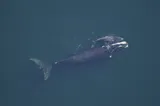
New England Aquarium — right whale sponsorship
The Boston aquarium's research team keeps the species' photo catalogue. Sponsoring a whale helps fund population monitoring.
Symbolic adoption — New England Aquarium — right whale sponsorship (external site, opens in a new tab) -
WWF-Canada
Supports research on right whales in the Gulf of St. Lawrence and works with governments and industry on protection measures.
Donate — WWF-Canada (external site, opens in a new tab)
-
-
-
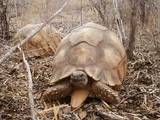
Turtle Conservancy
Funds anti-poaching patrols around Baly Bay, the Ampijoroa breeding centre and a breeding programme that produced 25 hatchlings in 2025.
Donate — Turtle Conservancy (external site, opens in a new tab) -
Durrell Wildlife Conservation Trust
Runs the ploughshare tortoise conservation breeding centre at Ampijoroa, Madagascar, and carries out research on the species.
Donate — Durrell Wildlife Conservation Trust (external site, opens in a new tab)
-
-
-
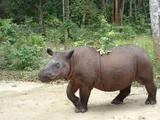
International Rhino Foundation
Co-founded the Way Kambas sanctuary in 1996 with the Indonesian organisation YABI, and supports breeding and protection of the species.
Donate — International Rhino Foundation (external site, opens in a new tab) -
Save the Rhino International
Funds conservation programmes for all five rhino species, in Africa and Asia.
Donate — Save the Rhino International (external site, opens in a new tab)
-
-
-
Sea Shepherd Conservation Society
Since 2015, its ships have been pulling illegal nets out of the vaquita's habitat alongside the Mexican authorities, and taking part in population surveys.
Donate — Sea Shepherd Conservation Society (external site, opens in a new tab) -
VIVA Vaquita (Vaquita Recovery Fund, CETOS Research Foundation)
A network of scientists and advocates funding education and advocacy to rid the vaquita's habitat of gillnets.
Donate — VIVA Vaquita (Vaquita Recovery Fund, CETOS Research Foundation) (external site, opens in a new tab)
-

How we choose organizations
We only recommend an organization if it meets all of the following conditions:
- It is officially registered as a charity, non-profit, public body or scientific institution in its country.
- It is transparent: it publishes activity reports or financial statements.
- It works in the field for the species concerned, with an identifiable programme: population monitoring, habitat protection, anti-poaching, breeding or research.
- It has a donation or symbolic adoption page that can be reached directly online.
And on our side:
- We receive nothing: no payment, no commission, no affiliate links.
- We check the links every time we update the species pages.
- Know an organization that should be listed here? Email us your suggestion.
Before giving, take a moment to visit the organization’s website. Depending on where you and the organization are based, your donation may or may not be eligible for a tax receipt.
Everyday habits
The biggest threats play out far from home, but some of our choices still matter.
- Never buy a wild animal or any product made from one, especially when travelling. The pet trade has pushed the ploughshare tortoise to the brink, and demand for illegal products caused the collapse of the vaquita. If in doubt about a souvenir, leave it: international trade in many species is regulated by the CITES convention.
- Find out where your seafood comes from: the species, the fishing area and how it was caught. Fishing nets and ropes are among the main causes of death for both the vaquita and the right whale.
- Never release a pet or a plant into the wild. Introduced species can devastate local wildlife, just as introduced predators did to the kākāpō.
- On a boat, slow down and follow navigation rules in areas where whales live, like those protecting the right whale in the Gulf of St. Lawrence.
- When visiting natural areas, follow the rules: stay on trails, don’t disturb animals and don’t feed wildlife.
Take part in science
Scientists need observations from everywhere, all the time. With a phone, anyone can contribute:
- iNaturalist: photograph a plant or animal, the community helps you identify it, and your observations can be used in research. Free app.
- eBird: record the birds you see. Run by the Cornell Lab of Ornithology, it feeds a vast database used by researchers.
No experience needed: a pigeon or sparrow seen on your street is useful too.
Spread the word
Many of these species are unknown to the general public. Getting a species known is already a way of helping. Send a species page to a friend, a teacher or a class.
Last updated: