Reptile · Land
Ploughshare tortoise: too beautiful for its own good
Its golden shell makes it one of the most beautiful tortoises in the world — and that is exactly what is dooming it. Ravaged by the pet trade, Madagascar's ploughshare tortoise may be down to just 50 to 100 animals in the wild. Conservation breeding programmes are preparing its return.
334 ploughshare tortoises seized by the authorities between 2002 and 2016, when only a few hundred were left in the wild
Meet the ploughshare tortoise
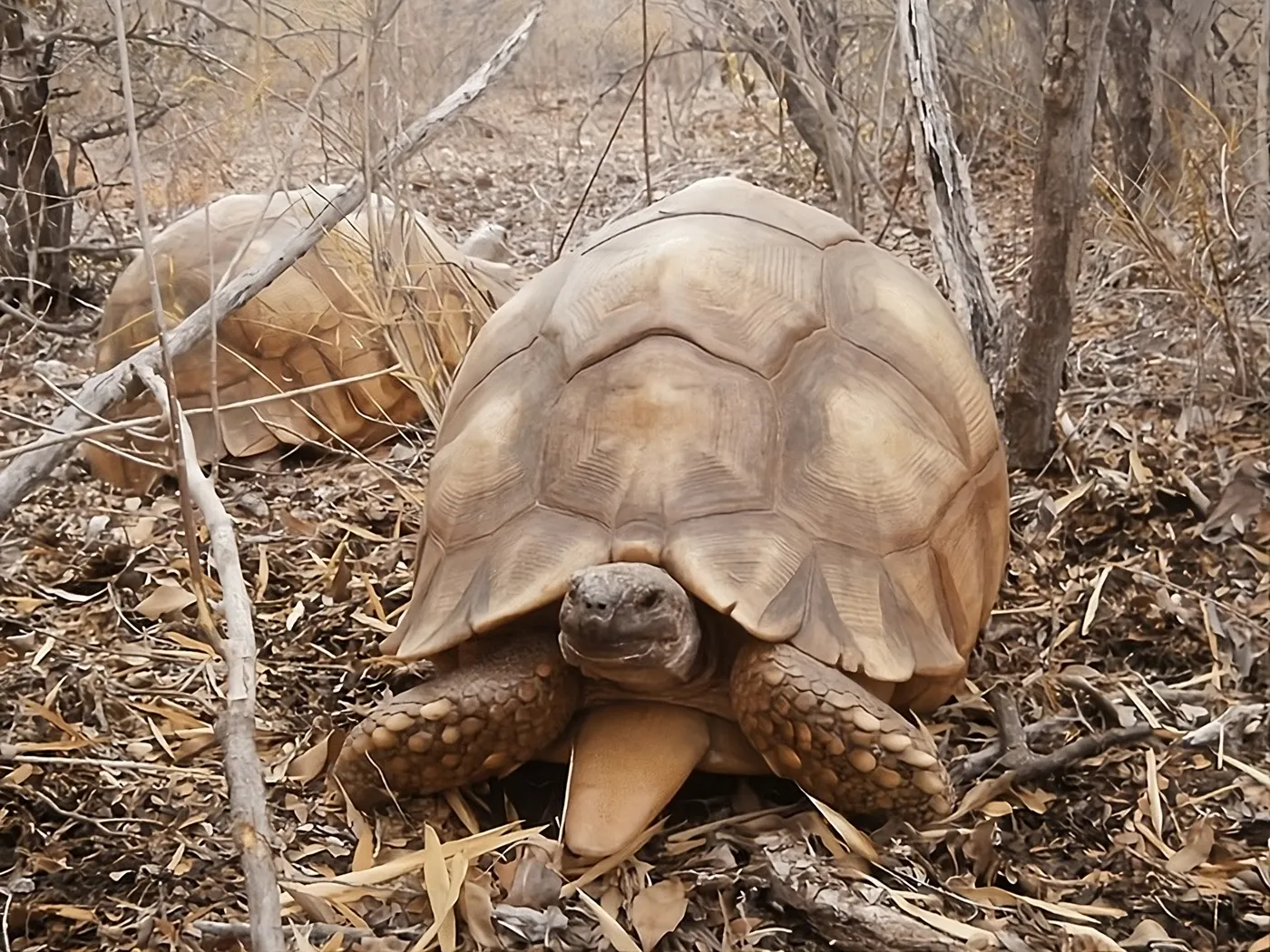
The ploughshare tortoise, known as the angonoka in Madagascar, has an oval, high-domed shell. Its golden scutes, ringed with dark brown, make it one of the most beautiful land tortoises in the world. Males measure 36 to 49 centimetres and weigh up to 19 kilos; females are slightly smaller.
Its name comes from a feature of its plastron — the underside of the shell. At the front, one scute curves upwards to form a point between the front legs, like the blade of a plough.
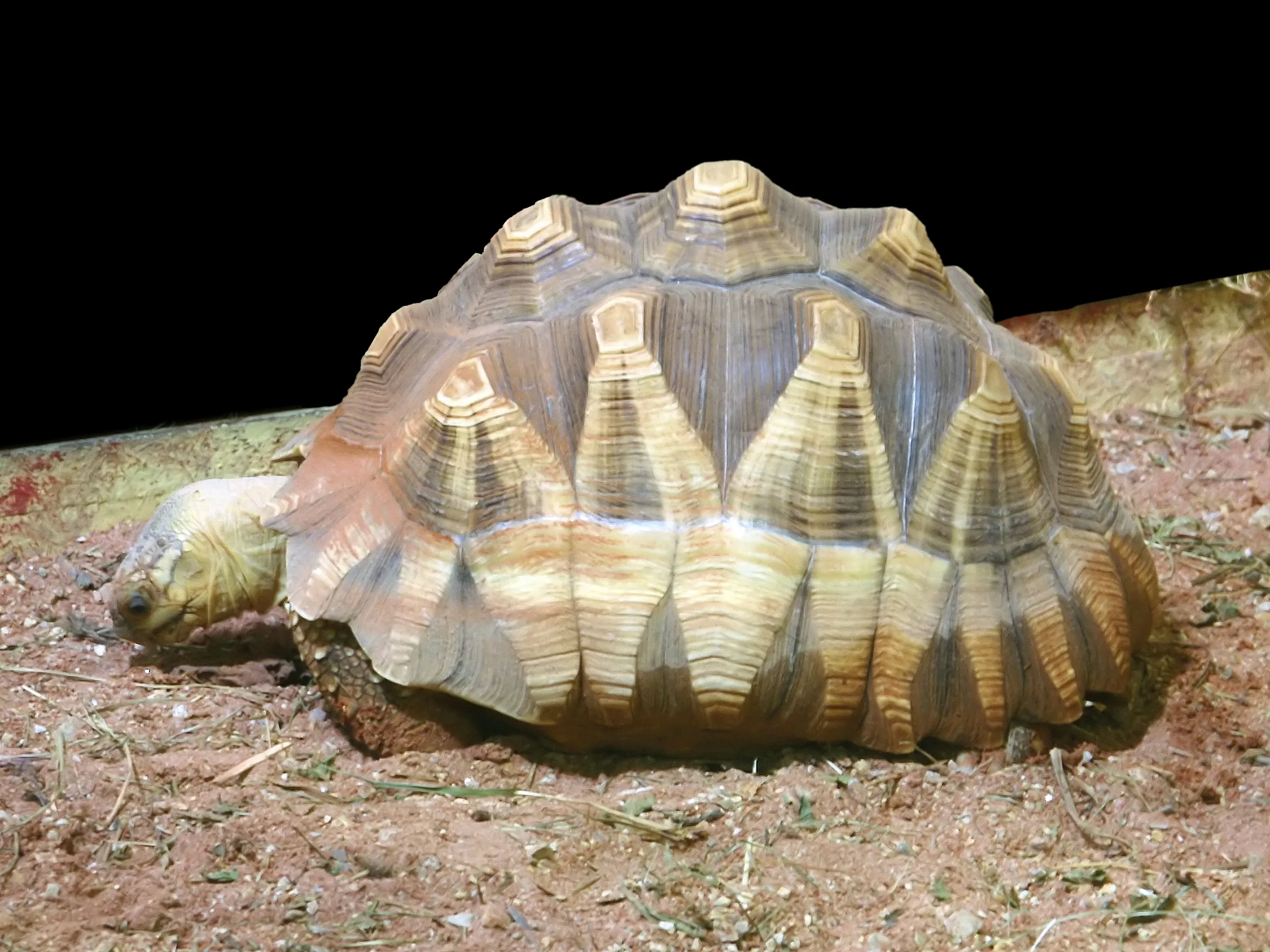
It lives in the scrub savannah of north-western Madagascar, among bamboo, palms and thickets. It feeds mainly on shrub leaves and fruit, but avoids bamboo leaves, which can contain cyanide. It even eats the dung of lemurs and bushpigs. It takes cover in dense thickets but prefers to feed in open grassy clearings. Active by day, it rests for most of the dry season, from May to October. It is most active in November and December.
It breeds very slowly. A female lays four or five clutches a year, but only one to six eggs each time, and incubation lasts nearly eight months on average. As in many tortoises, the incubation temperature decides whether a hatchling will be male or female. Hatchlings are independent from the start, but many don’t make it: depending on the year, between 44% and 96% of youngsters survive, compared with about 97% of adults. It then takes around twenty years for a ploughshare tortoise to reach adulthood. It may live 50 to 100 years.
Did you know? The “ploughshare” is a weapon in the breeding season. Two rival males face off, each trying to slide his ploughshare under the other’s shell and flip him onto his back. The winner earns the right to court the female. These contests take place during the mating season, from October to February, peaking in November and December.
Why it is endangered
The species lives in only one place on Earth: the Baly Bay area of north-western Madagascar, where a national park was created to protect it.
Its biggest threat is the pet trade. Its beauty and rarity attract collectors willing to pay huge sums. Between 2002 and 2016, the authorities seized 334 ploughshare tortoises in Madagascar and abroad, and trafficking surged from 2010 onwards. Field teams watched black-market prices soar.
Surveys carried out between 2006 and 2015 showed that the population had more than halved. In 2014–2015, there were still around 500 adults and subadults. Since then, poaching has intensified. Two of the four subpopulations are thought to have vanished, and a third may have fewer than ten animals. Today, scientists estimate that only 50 to 100 remain in the wild, and the Turtle Survival Alliance considers the species “presumed functionally extinct” in the wild. Fires, lit to create cattle pasture, are also destroying its habitat.
What is being done to save it
The Durrell Wildlife Conservation Trust runs a conservation breeding centre at Ampijoroa, in Ankarafantsika National Park. It has been protected by armed guards since poachers attacked it.
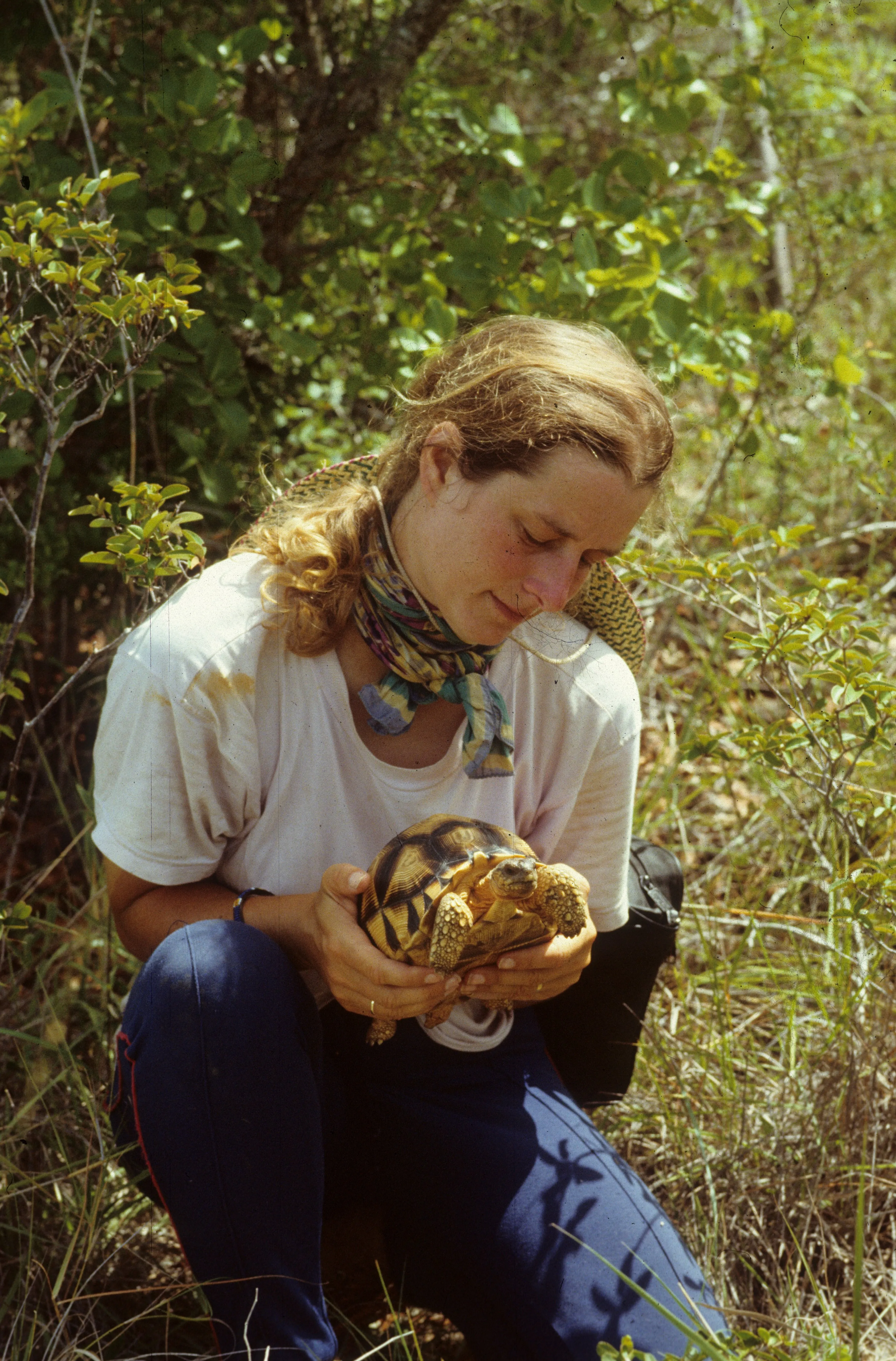
To deter smugglers, teams engrave an identification number on the shells of wild tortoises. A marked tortoise is far less attractive to collectors. Partners also fund anti-poaching patrols around Baly Bay and raise awareness in local communities. They also work with local authorities to enforce the law and monitor the illegal trade.
Good news came from California. Ploughshare tortoises seized from smugglers had been entrusted to the Turtle Conservancy in 2010. In 2025, they produced 25 hatchlings — the first successful breeding of the species outside Madagascar. From 2026, the young tortoises are due to be moved to Madagascar to grow up in protected facilities.
Releases into the wild are on hold for now, while poaching remains too great a threat. But a reserve population now exists. When Baly Bay is safe again, it will be able to restock it.
How you can help
Sauvons les animaux does not collect donations. These recognised organisations work for the ploughshare tortoise:
- Turtle Conservancy funds patrols, the breeding centre and the return of young tortoises to Madagascar. Donate for the ploughshare tortoise
- Durrell Wildlife Conservation Trust runs the Ampijoroa breeding centre. Donate to Durrell
And in everyday life:
- Never buy a tortoise without knowing its legal origin. Wildlife trafficking starts with demand.
- Report any suspicious online ads for rare tortoises to wildlife protection authorities.
- When travelling, never bring back an animal or a shell: it is often illegal and feeds the trade.
Support an organization
We do not collect donations. These trusted organizations work directly for this species:
-
Turtle Conservancy
Funds anti-poaching patrols around Baly Bay, the Ampijoroa breeding centre and a breeding programme that produced 25 hatchlings in 2025.
Donate — Turtle Conservancy (external site, opens in a new tab) -
Durrell Wildlife Conservation Trust
Runs the ploughshare tortoise conservation breeding centre at Ampijoroa, Madagascar, and carries out research on the species.
Donate — Durrell Wildlife Conservation Trust (external site, opens in a new tab)
In pictures
Use the left and right arrow keys to browse the photos.
-
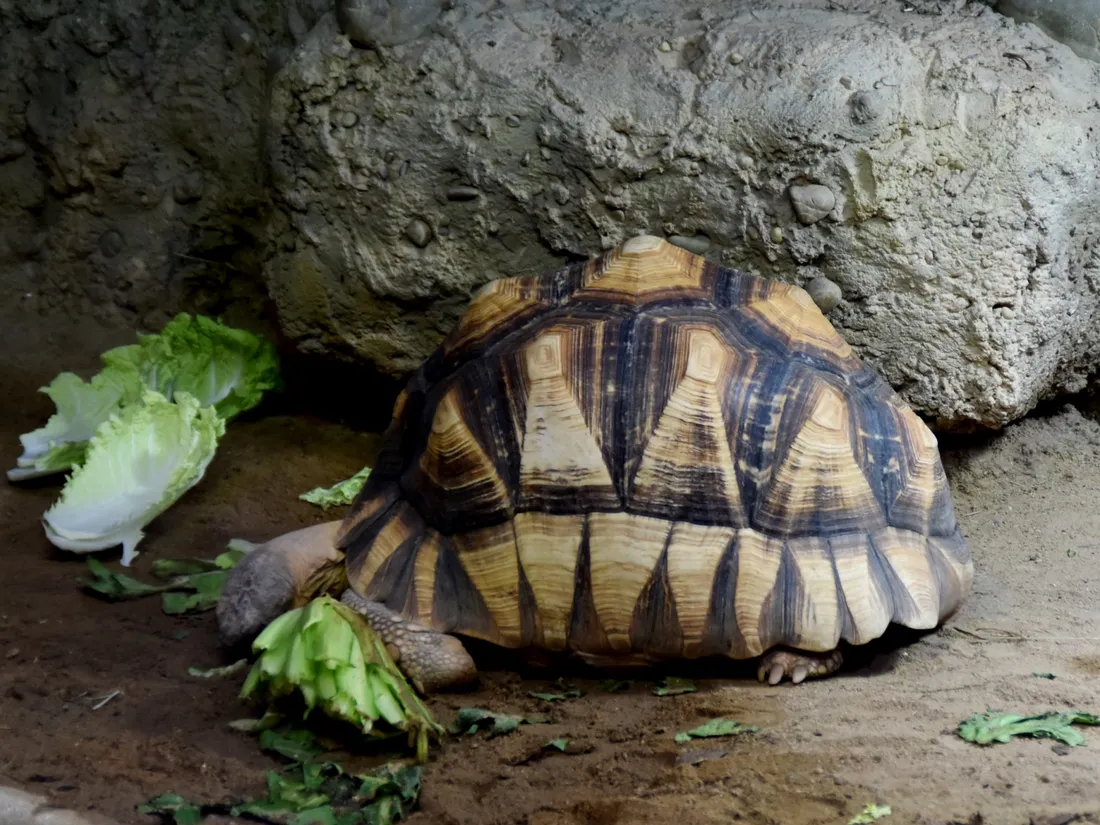
A ploughshare tortoise at Frankfurt Zoo (Germany) in 2017. Zoos take part in breeding programmes. Photo: NasserHalaweh, CC BY-SA 4.0 (source) -
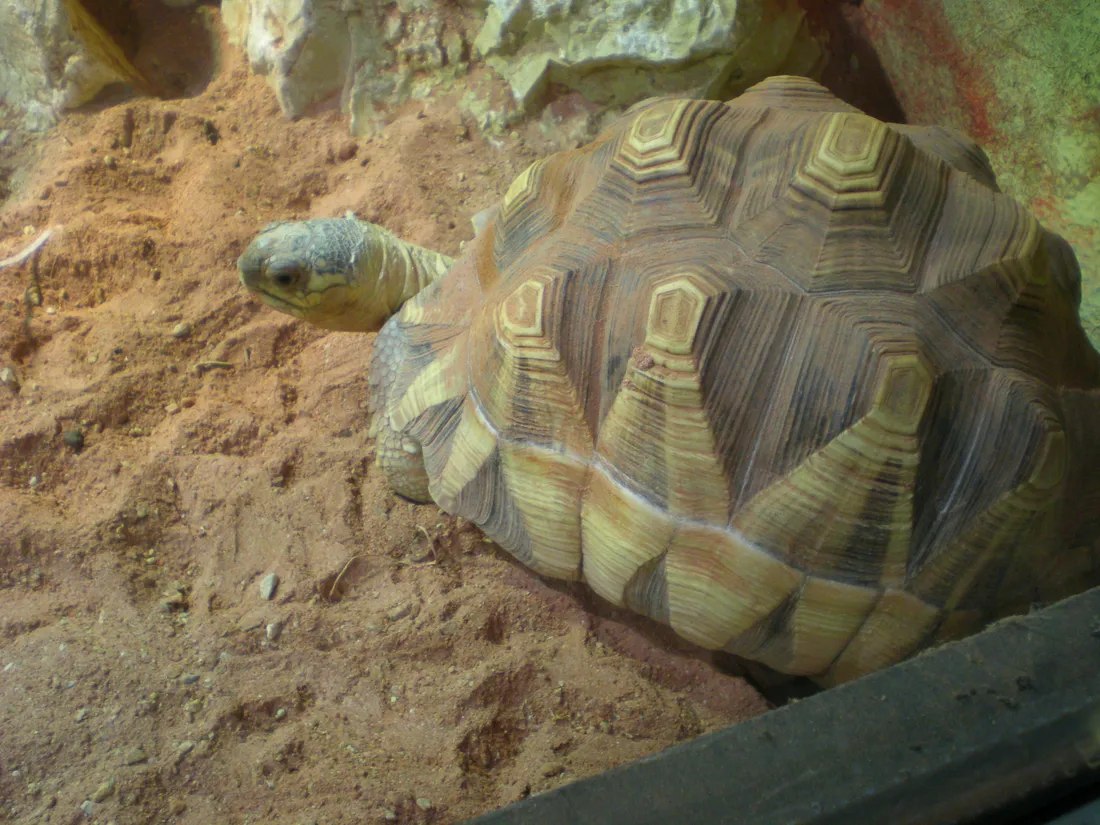
A ploughshare tortoise at Pairi Daiza park (Belgium) in 2007. Photo: Daniel71953, CC BY-SA 4.0 (source) -
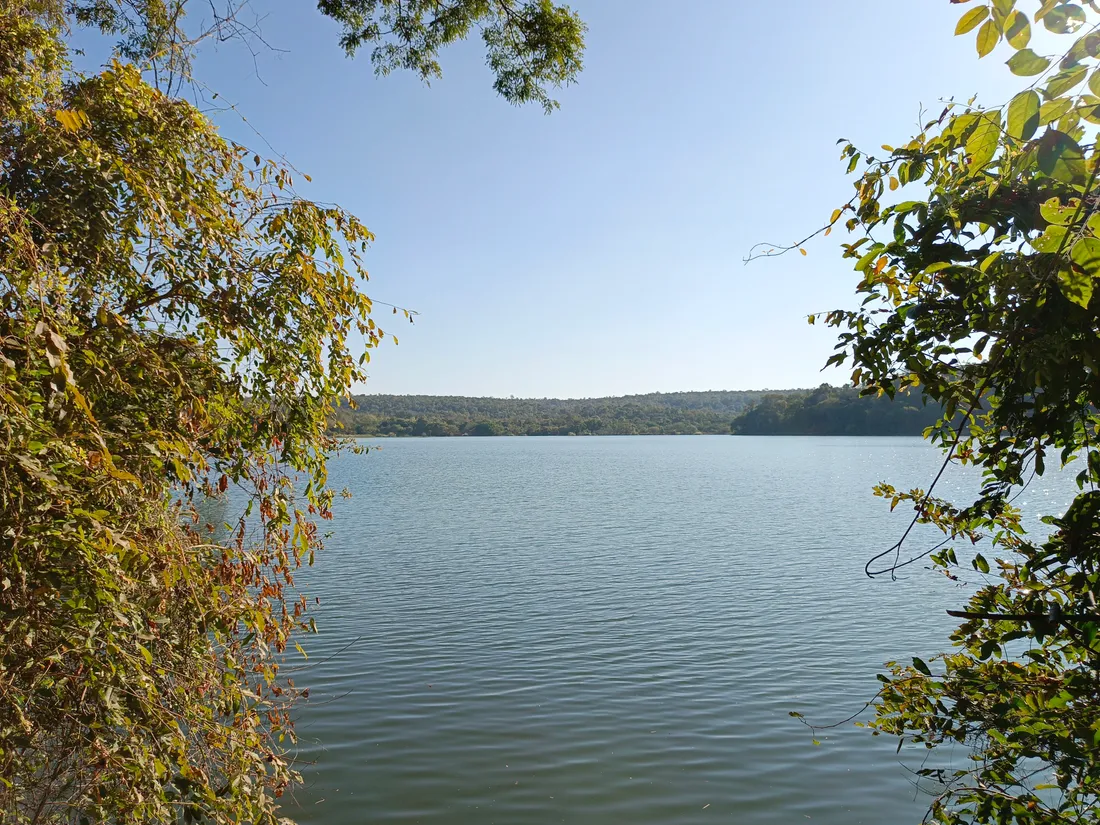
Lake Ravelobe at Ampijoroa, in Ankarafantsika National Park, home to the ploughshare tortoise breeding centre run by Durrell. Photo: Phantom401, CC BY-SA 4.0 (source) -
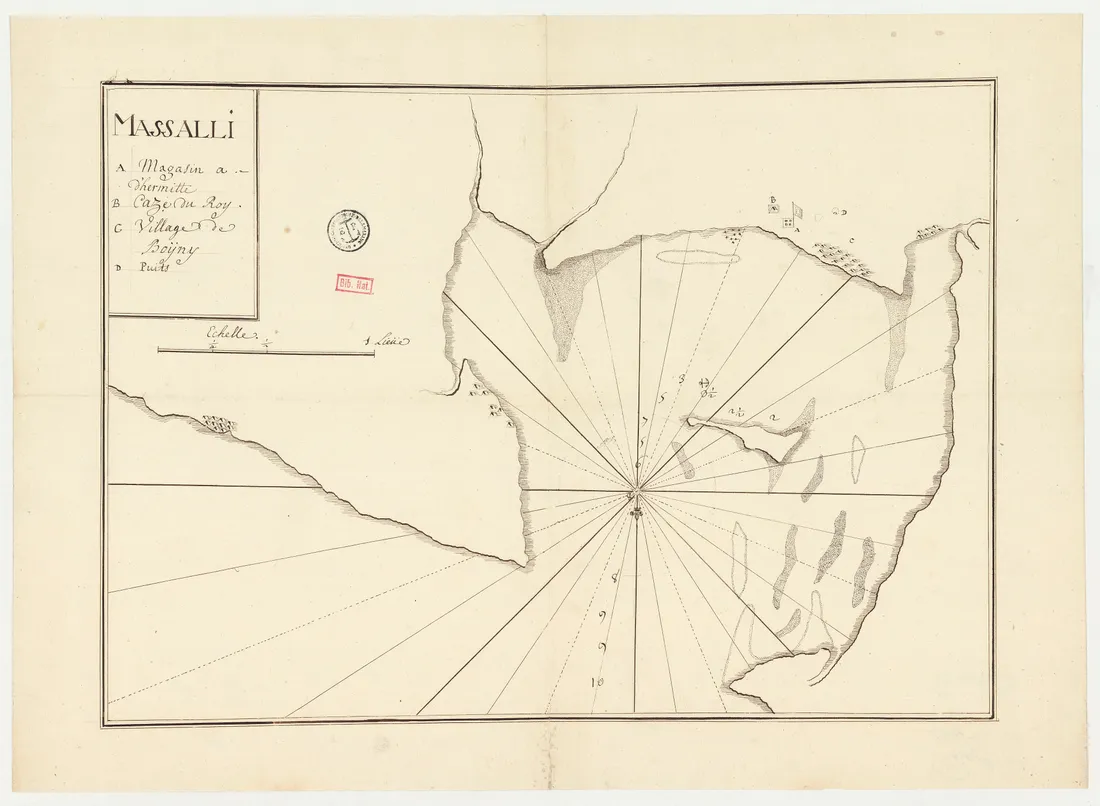
An 18th-century map of Baly Bay, the only place on Earth where the ploughshare tortoise lives. Photo: Unknown author (Bibliothèque nationale de France), Public domain (source)
Share this page
Sources
- Astrochelys yniphora — Red List assessment (2008), UICN, accessed .
- Ploughshare tortoise, Phoenix Species Project, accessed .
- Ploughshare Tortoise, Turtle Survival Alliance, accessed .
- Illegal pet trade driving the ploughshare tortoise to extinction, Durrell Wildlife Conservation Trust, accessed .
- Ploughshare tortoise program, Turtle Conservancy, accessed .
- Astrochelys yniphora — species account, Animal Diversity Web (University of Michigan), accessed .
Photo credits
- A wild ploughshare tortoise in its Baly Bay habitat, Madagascar. Photo: Andrea Currylow, Angelo Ramy Mandimbihasina, Paul Gibbons et al. (PLOS ONE, 2017), CC BY 4.0 (source)
- The domed shell and the "ploughshare" sticking out beneath the head, between the front legs. Photographed at Pairi Daiza park (Belgium). Photo: Hans Hillewaert, CC BY-SA 4.0 (source)
- Ecologist Liz Howe with a ploughshare tortoise in Madagascar. Photo: Mike Howe, CC BY-SA 4.0 (source)
- A ploughshare tortoise at Frankfurt Zoo (Germany) in 2017. Zoos take part in breeding programmes. Photo: NasserHalaweh, CC BY-SA 4.0 (source)
- A ploughshare tortoise at Pairi Daiza park (Belgium) in 2007. Photo: Daniel71953, CC BY-SA 4.0 (source)
- Lake Ravelobe at Ampijoroa, in Ankarafantsika National Park, home to the ploughshare tortoise breeding centre run by Durrell. Photo: Phantom401, CC BY-SA 4.0 (source)
- An 18th-century map of Baly Bay, the only place on Earth where the ploughshare tortoise lives. Photo: Unknown author (Bibliothèque nationale de France), Public domain (source)
Updated on