Mammal · Marine
Vaquita: the world's smallest porpoise is still holding on
Somewhere between seven and ten are left. The vaquita, a shy porpoise from Mexico's Gulf of California, is the most endangered marine mammal on Earth. Yet calves are still being born — and if the nets disappear from its waters, this species can still bounce back.
7–10 vaquitas sighted during the September 2025 survey
Meet the vaquita
The vaquita is considered the smallest cetacean in the world. Adults measure 1.2 to 1.5 metres long and weigh 45 to 50 kilos, with females usually a little larger than males. A newborn calf is just 70 to 78 centimetres long.
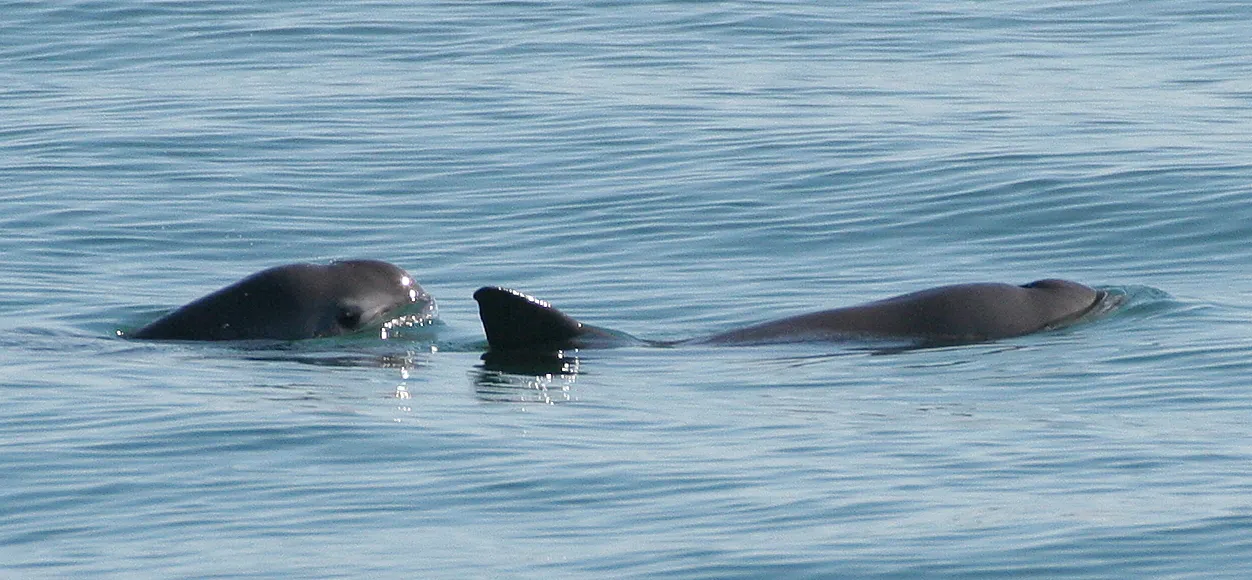
Its back is dark grey, fading to paler grey along the sides, with white streaks on the throat and belly. What makes it unforgettable, though, are the wide black rings around its eyes and its dark lips — as if someone had drawn on eyeliner. Its tall, triangular dorsal fin is large for a porpoise.
Vaquitas are shy and secretive. They are seen alone, in pairs or in small groups of up to seven. Rather than leaping, they roll slowly to the surface to breathe and slip back under without a splash. To find their way and hunt in murky water, they send out very high-pitched clicks — a kind of sonar called echolocation. They feed on small fish living near the seabed, as well as squid and crabs: researchers once found 17 different fish species in the stomach of a single vaquita.
Much of its life remains a mystery. Scientists believe it resembles that of the harbour porpoise: maturity at around three to five years, a pregnancy of roughly eleven months, and births between February and April. Free from nets, a vaquita could live for about twenty years.
Did you know? Vaquita means “little cow” in Spanish. Science only described the species in 1958, and it lives nowhere but the northern Gulf of California. In recent years, the last vaquitas have been concentrated in an area of roughly 24 by 12 kilometres near the port of San Felipe.
Why it is endangered
Nobody hunts the vaquita. It dies by accident, caught in gillnets — long walls of netting hung in the water to catch fish and shrimp. Once tangled, it can no longer reach the surface to breathe, and it drowns.
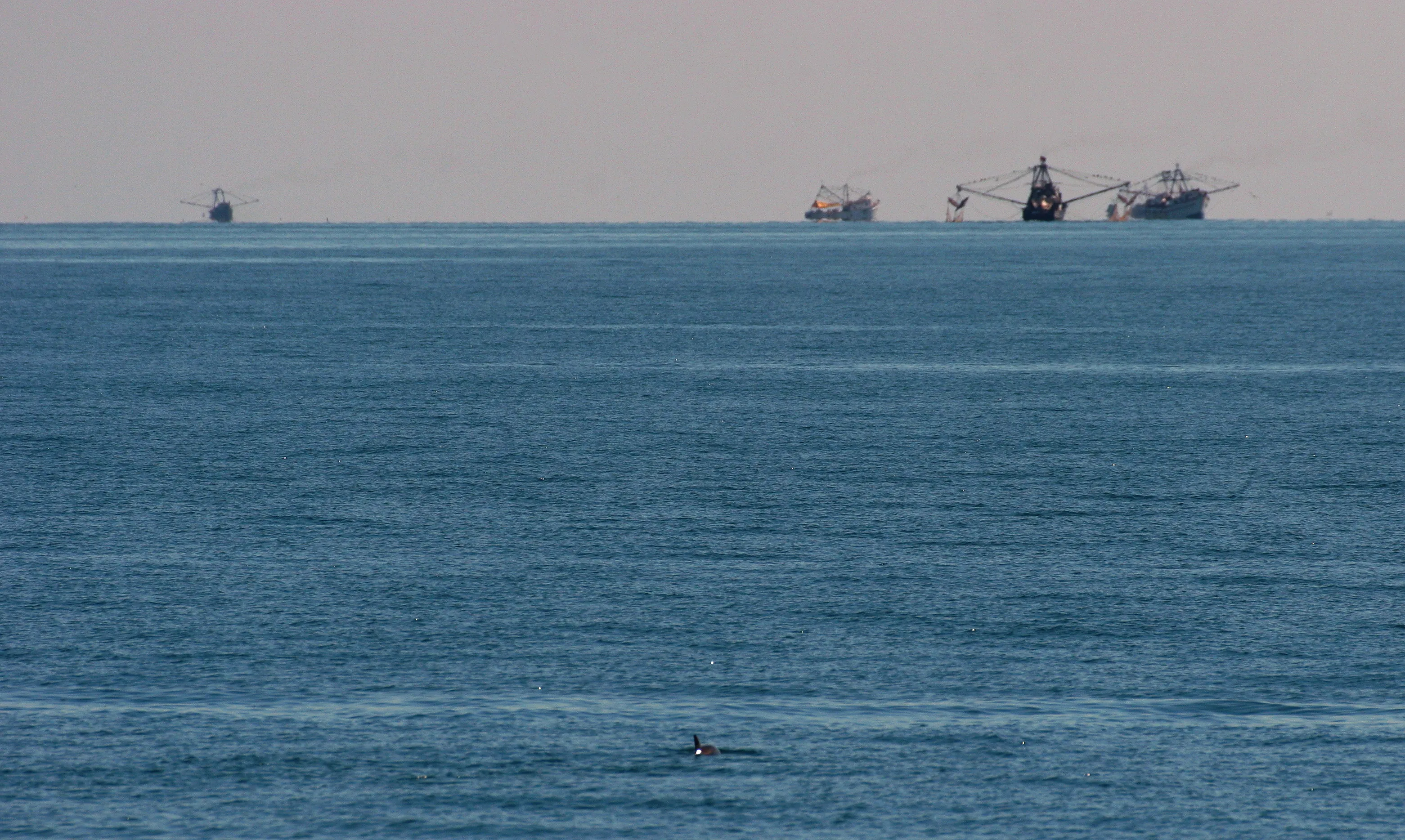
The danger escalated dramatically with illegal fishing for the totoaba, a large fish of the Gulf that is also protected. Its swim bladder — an air-filled sac that helps it float — is dried and smuggled abroad, notably to China, where it fetches very high prices. The nets set for totoaba are exactly the right size to trap a vaquita.
The numbers tell the story of a collapse. Scientists estimated 567 vaquitas in 1997, then 245 in 2008. When totoaba poaching took off again, things got much worse: according to a study published in 2019, the population fell by almost 99% between 2011 and 2018, leaving fewer than 19 animals by the summer of 2018. The decline continued despite an emergency gillnet ban adopted in 2015, because illegal nets were still in use. Between 2016 and 2019, ten vaquitas were found dead in gillnets.
What is being done to save it
Since 1996, an international committee of scientists known as CIRVA has advised Mexico, and its message has never changed: bring accidental deaths down to zero — which means removing every gillnet from the vaquita’s habitat. In 2017, a rescue operation tried to capture vaquitas and keep them safe in human care. It was halted after two captures: the animals coped very badly with captivity, and one of them died. Since then, one thing is clear — the vaquita can only be saved in the wild.
Mexico has set up a “Zero Tolerance Area”, closed to gillnet fishing, where the last vaquitas live. To physically stop nets from being set, it has placed 193 concrete blocks fitted with hooks on the seabed, which snag and disable illegal nets. Sea Shepherd ships patrol alongside the Mexican Navy and haul out abandoned “ghost nets”. According to the 2025 survey report, the number of fishing boats in the area has dropped by more than 90% over three seasons.
And the results are starting to show. In September 2025, scientists sighted between 7 and 10 different vaquitas, including at least one or two calves, along with young animals born after 2022. There is no sign that the 45%-a-year decline of the 2010s is continuing. The report’s authors say they are “optimistic”: the population can recover if gillnet deaths stop. Seventeen young people from San Felipe have also been trained to help monitor the species — a way of bringing local communities into the effort to protect “their” porpoise.
The fight is not over. Experts are calling for urgent protection of the waters to the north-west of the current zone, which are still exposed to nets, and for help so fishers can switch to other fishing gear. Since 2019, the Islands and Protected Areas of the Gulf of California have been on UNESCO’s List of World Heritage in Danger.
How you can help
Sauvons les animaux does not collect donations. These recognised organisations work directly for the vaquita:
- Sea Shepherd Conservation Society removes illegal nets at sea and takes part in population surveys. Donate to Sea Shepherd
- VIVA Vaquita (CETOS Research Foundation) funds education and advocacy for a gillnet-free habitat. Donate to VIVA Vaquita
And in everyday life:
- Choose your seafood carefully. Avoid shrimp and fish caught with gillnets, and check a sustainable seafood guide such as Seafood Watch.
- Talk about the vaquita. Many people have never heard of it — sharing its story is already a way of protecting it.
- Amplify the calls to remove gillnets from the vaquita’s habitat, such as those run by the organisations above.
Support an organization
We do not collect donations. These trusted organizations work directly for this species:
-
Sea Shepherd Conservation Society
Since 2015, its ships have been pulling illegal nets out of the vaquita's habitat alongside the Mexican authorities, and taking part in population surveys.
Donate — Sea Shepherd Conservation Society (external site, opens in a new tab) -
VIVA Vaquita (Vaquita Recovery Fund, CETOS Research Foundation)
A network of scientists and advocates funding education and advocacy to rid the vaquita's habitat of gillnets.
Donate — VIVA Vaquita (Vaquita Recovery Fund, CETOS Research Foundation) (external site, opens in a new tab)
In pictures
Use the left and right arrow keys to browse the photos.
-
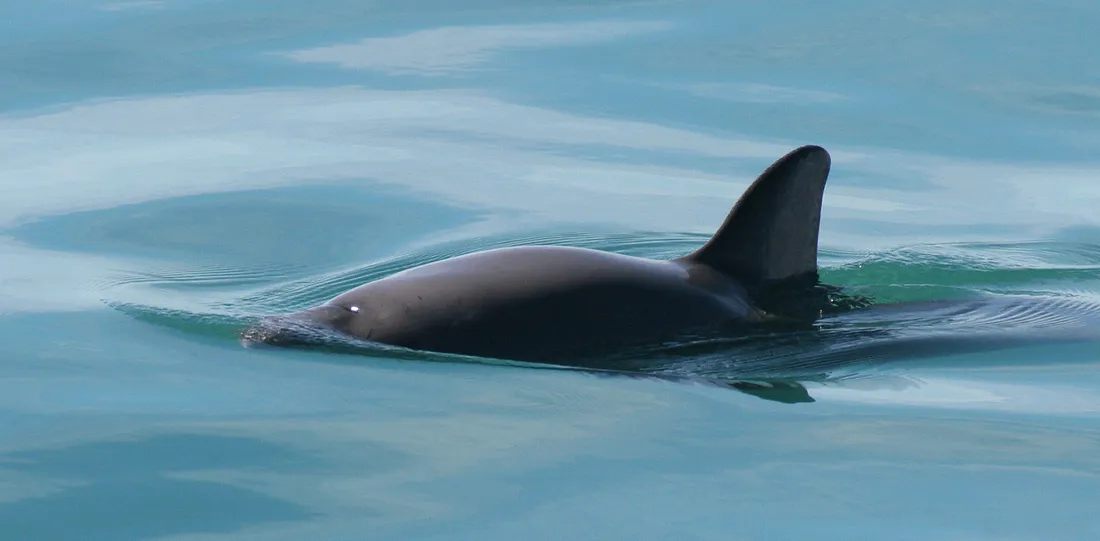
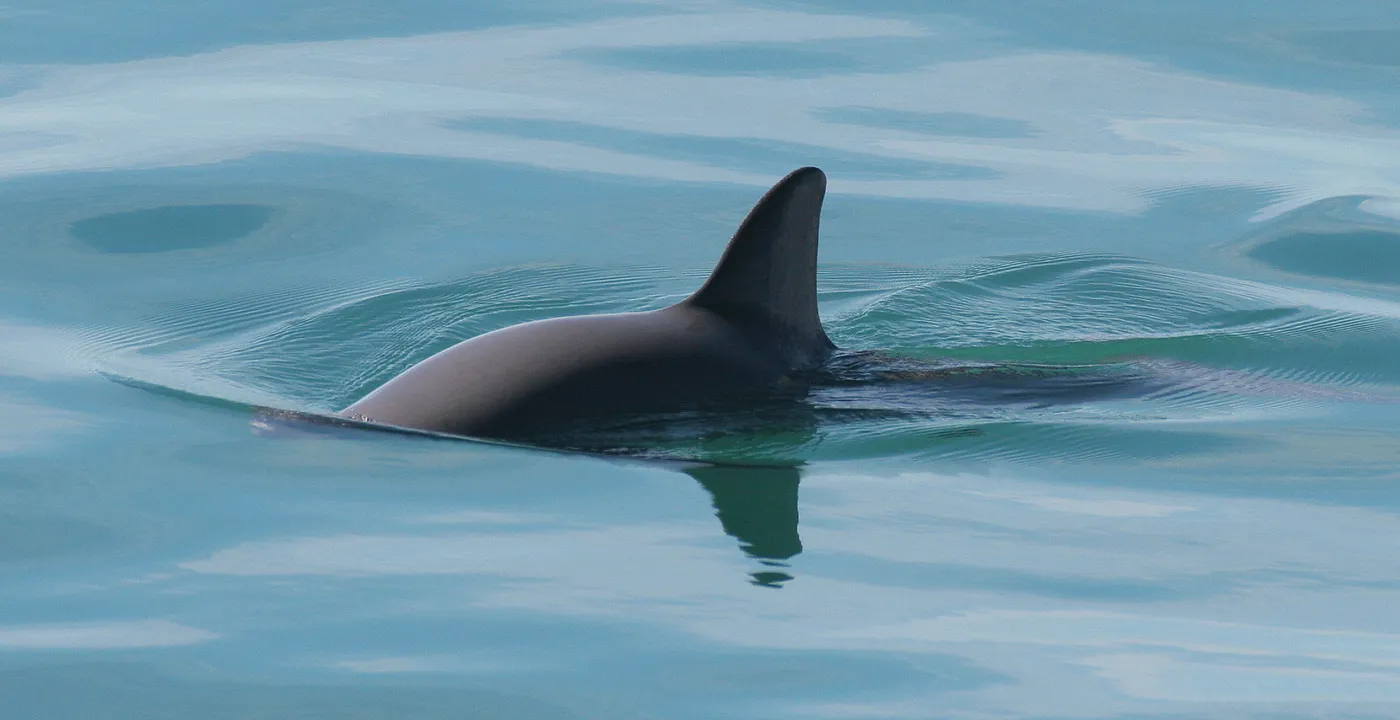
Vaquitas don't do acrobatics: they surface quietly to breathe, then slip back under. Photo: Paula Olson / NOAA, Public domain (source) -
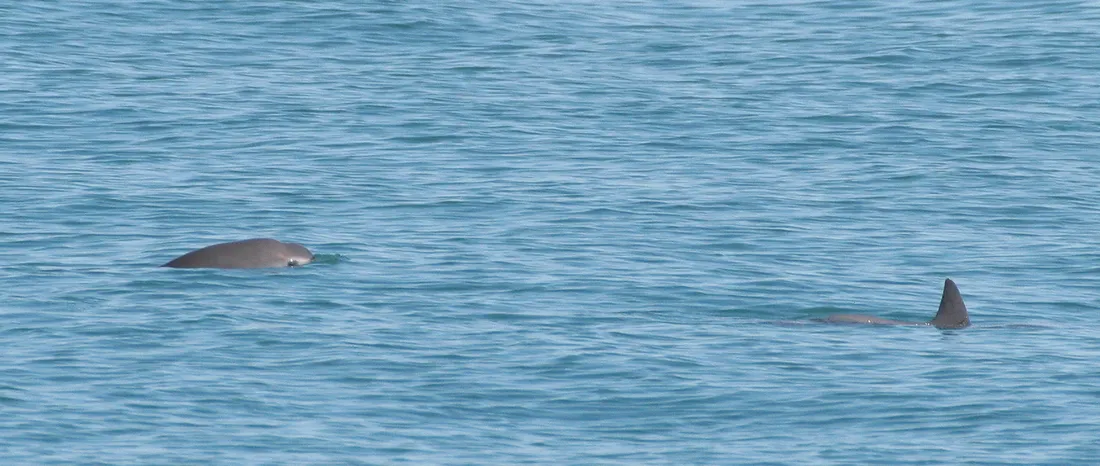
Two vaquitas seen from afar. They live alone, in pairs or in small groups. Photo: Paula Olson / NOAA, Public domain (source) -
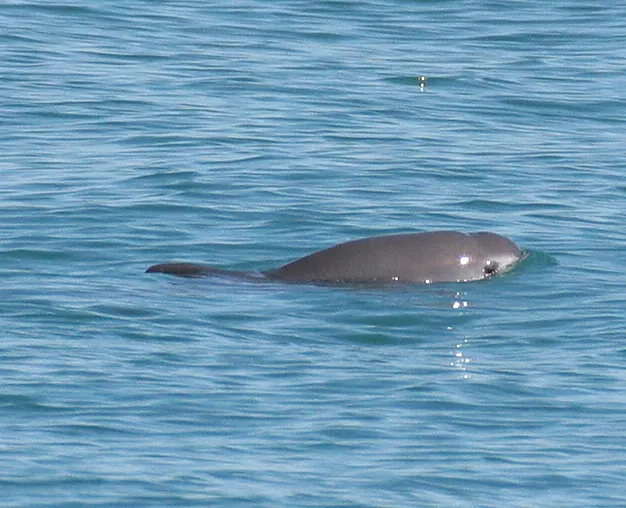
No beak here: the short, rounded snout is typical of porpoises. Photo: Paula Olson / NOAA, Public domain (source) -
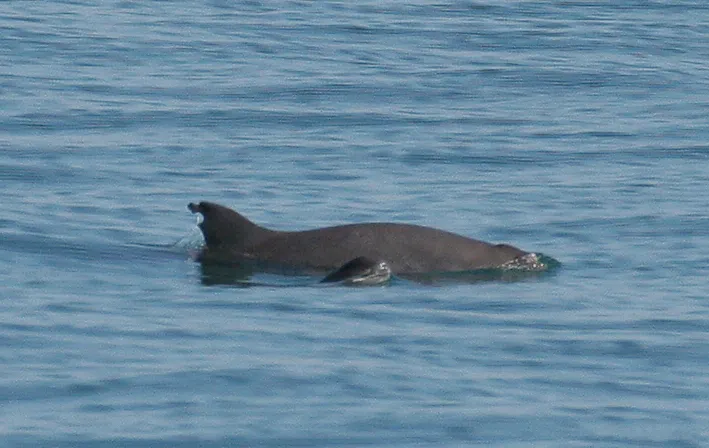
Every sighting counts: scientists can recognise some individuals by their fins. Photo: Paula Olson / NOAA, Public domain (source)


Share this page
Sources
- Phocoena sinus — Red List assessment (Rojas-Bracho, Taylor & Jaramillo-Legorreta, 2022), IUCN, accessed .
- Vaquita acoustic and visual survey 2025 — report, IUCN SSC Cetacean Specialist Group, accessed .
- Vaquita Survey 2025 — executive summary, Sea Shepherd Conservation Society, accessed .
- Decline towards extinction of Mexico's vaquita porpoise (Phocoena sinus), Royal Society Open Science 6(7), 2019, Jaramillo-Legorreta et al., accessed .
- Vaquita — species page, IUCN SSC Cetacean Specialist Group, accessed .
- Islands and Protected Areas of the Gulf of California — 2024 state of conservation, UNESCO World Heritage Centre, accessed .
- Vaquita — species page, Aquarium of the Pacific, accessed .
- Protecting the vaquita porpoise (2024), Sea Shepherd Conservation Society, accessed .
- Act now, VIVA Vaquita, accessed .
- Vaquita — species page, WWF, accessed .
- VaquitaCPR ends capture program after vaquita dies in captivity (2017), Mongabay, accessed .
Photo credits
- A vaquita comes up to breathe in the northern Gulf of California, October 2008. Photo: Paula Olson / NOAA, Public domain (source)
- Two vaquitas at the surface. The black rings around the eyes and the dark lips are the species' signature. Photo: Paula Olson / NOAA, Public domain (source)
- A vaquita in the foreground, fishing boats on the horizon: the whole story of its survival in a single frame. Photo: Paula Olson / NOAA, Public domain (source)
- Vaquitas don't do acrobatics: they surface quietly to breathe, then slip back under. Photo: Paula Olson / NOAA, Public domain (source)
- Two vaquitas seen from afar. They live alone, in pairs or in small groups. Photo: Paula Olson / NOAA, Public domain (source)
- No beak here: the short, rounded snout is typical of porpoises. Photo: Paula Olson / NOAA, Public domain (source)
- Every sighting counts: scientists can recognise some individuals by their fins. Photo: Paula Olson / NOAA, Public domain (source)


Updated on
Discover other species
-
-
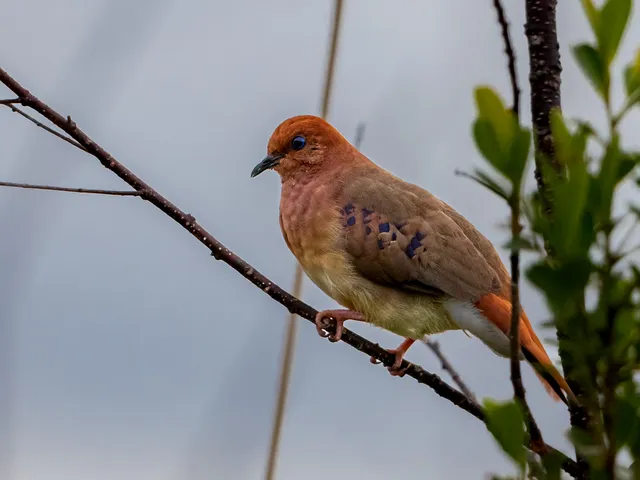
Critically Endangered Bird
Blue-eyed ground dove (rolinha-do-planalto)
Columbina cyanopis
Population: ≈ 10 adults (2025)
-