Bird · Land
Kākāpō: the flightless parrot breaking records
Heavy, nocturnal and unable to fly, New Zealand's kākāpō was down to just 51 birds in 1995. Thanks to a recovery programme that looks after every single bird, there are now 325 — a record. It is one of conservation's most hopeful stories.
51 → 325 kākāpō in 1995, and in September 2026
Meet the kākāpō
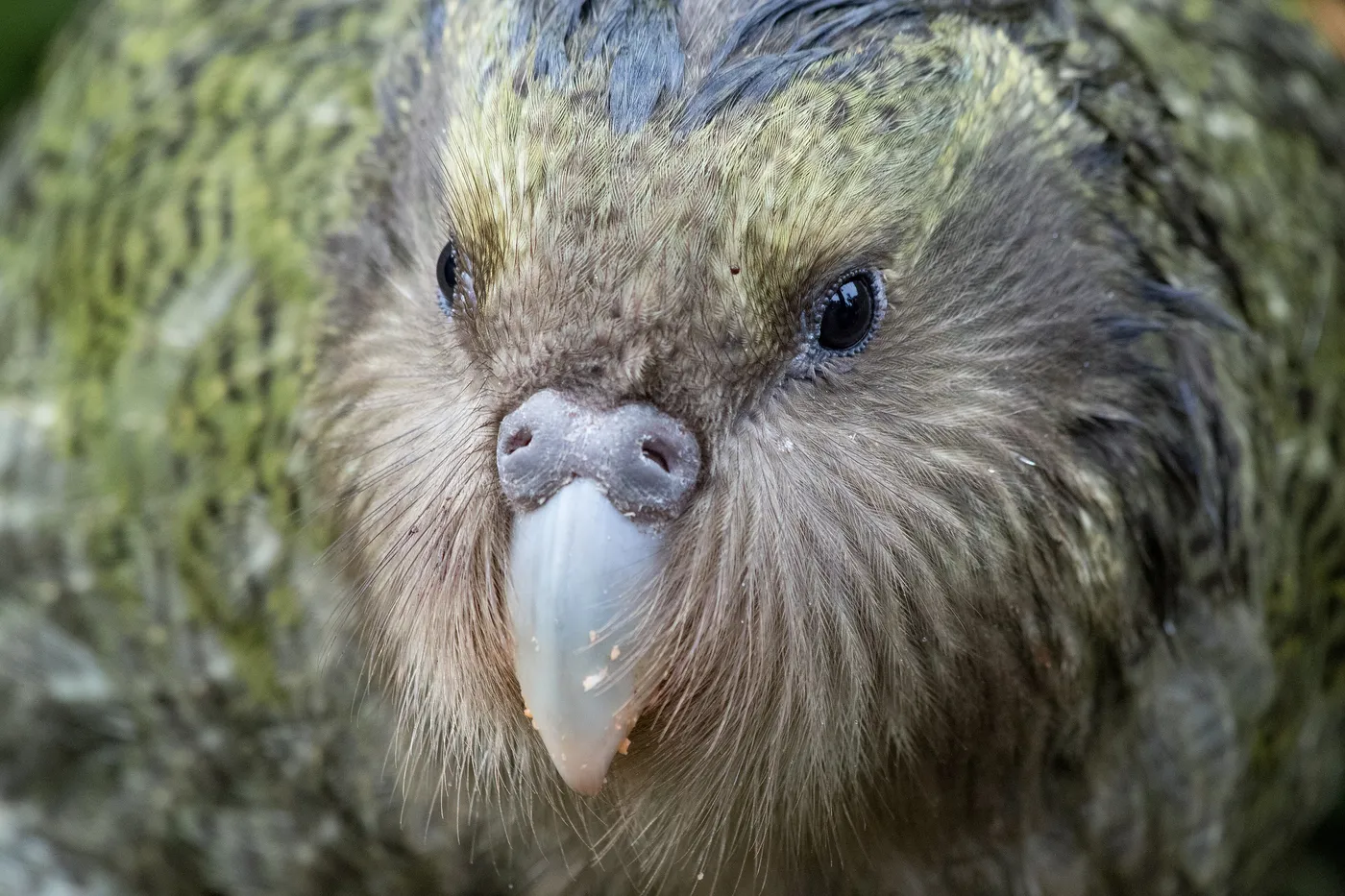
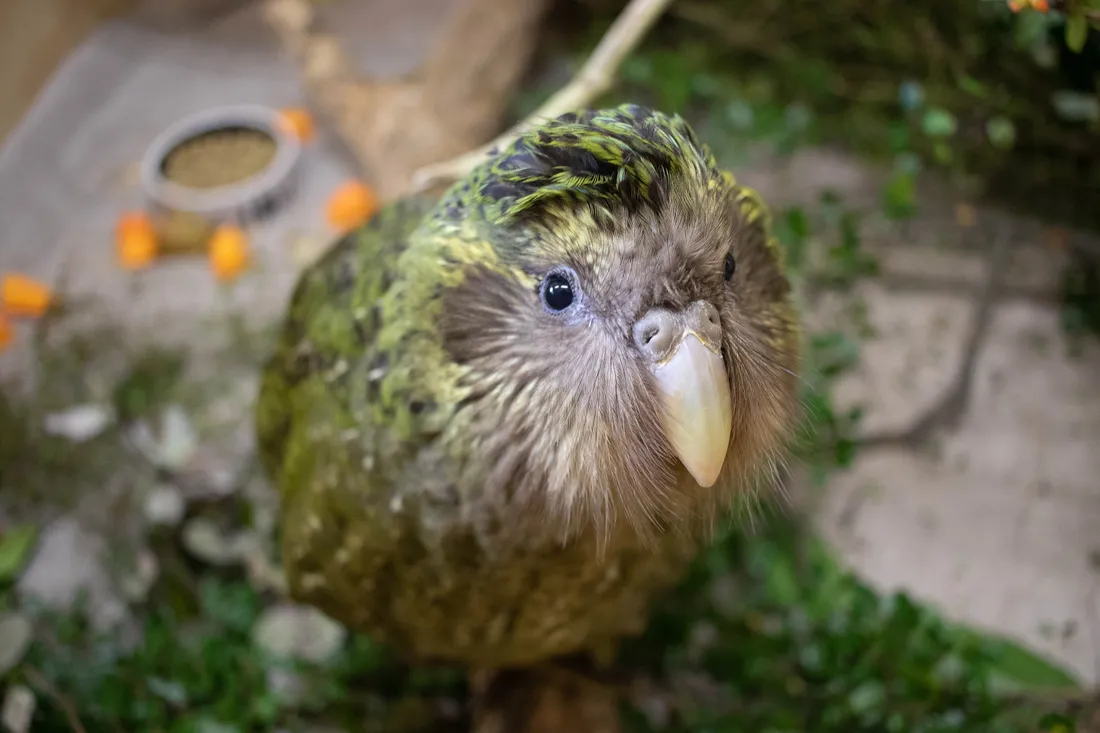
The kākāpō is unlike any other parrot. It can weigh up to 4 kilos, making it the world’s heaviest parrot. It is also the only parrot on Earth that cannot fly. It makes up for it with sturdy legs: it is a superb climber, scaling trees 20 metres tall with its claws, and a strong walker that can cover several kilometres at a time. To get down from a tree, it jumps and spreads its wings to slow its fall. Females can even manage short glides across gaps of three or four metres.
Its moss-green plumage, mottled with brown and yellow, makes perfect camouflage in the undergrowth. With its facial disc and feathery whiskers, it looks a lot like an owl. Its Māori name means “night parrot” — it is nocturnal.
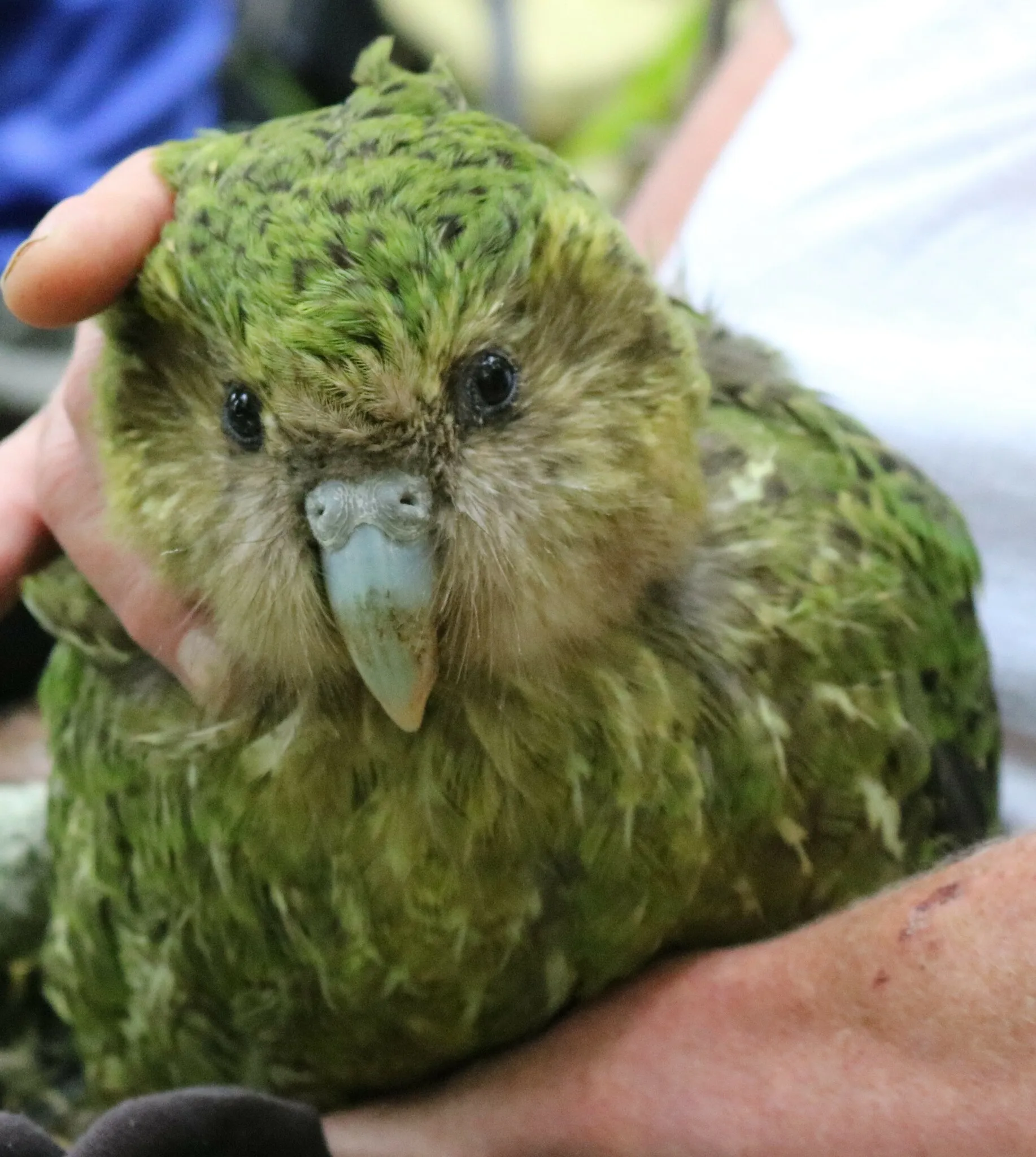
Kākāpō live a long time — possibly up to 90 years in the wild. But they breed rarely. Solitary by nature, males and females only meet to mate, and females raise their chicks alone. Neighbours still keep in touch with loud calls, and keepers will tell you that every kākāpō has its own personality. And they only do so every two to four years, in seasons when the rimu — a tall New Zealand conifer — produces a bumper crop of fruit. During those seasons, kākāpō feed almost exclusively on its berries.
Did you know? To attract a mate, the male digs a bowl in the ground and sends out deep booming calls from it, like the thud of a drum. He can boom for up to eight hours a night, for two to three months. No other parrot breeds this way.
Why it is endangered
The kākāpō evolved for millions of years in a land without predatory land mammals. Its strategy in the face of danger is to freeze and rely on its camouflage. That works well against birds of prey that hunt by sight, but not against mammals that hunt by smell, day and night — especially as the kākāpō has a very distinctive scent.
The arrival of humans changed everything. Kākāpō were hunted and their habitat cleared. Rats that escaped from ships devoured eggs and chicks, then introduced cats, ferrets and stoats killed the adults. Collectors and museums also took large numbers. By the late 19th century, scientists already knew the species was on the brink. By 1995, only 51 birds were known to exist, including just 20 females.
Two weaknesses still hold back its recovery:
- Very low genetic diversity, a legacy of that bottleneck, which causes fertility problems and eggs that fail to hatch.
- Lack of safe space. Kākāpō can only live on islands completely free of predators, and such islands are rare.
What is being done to save it
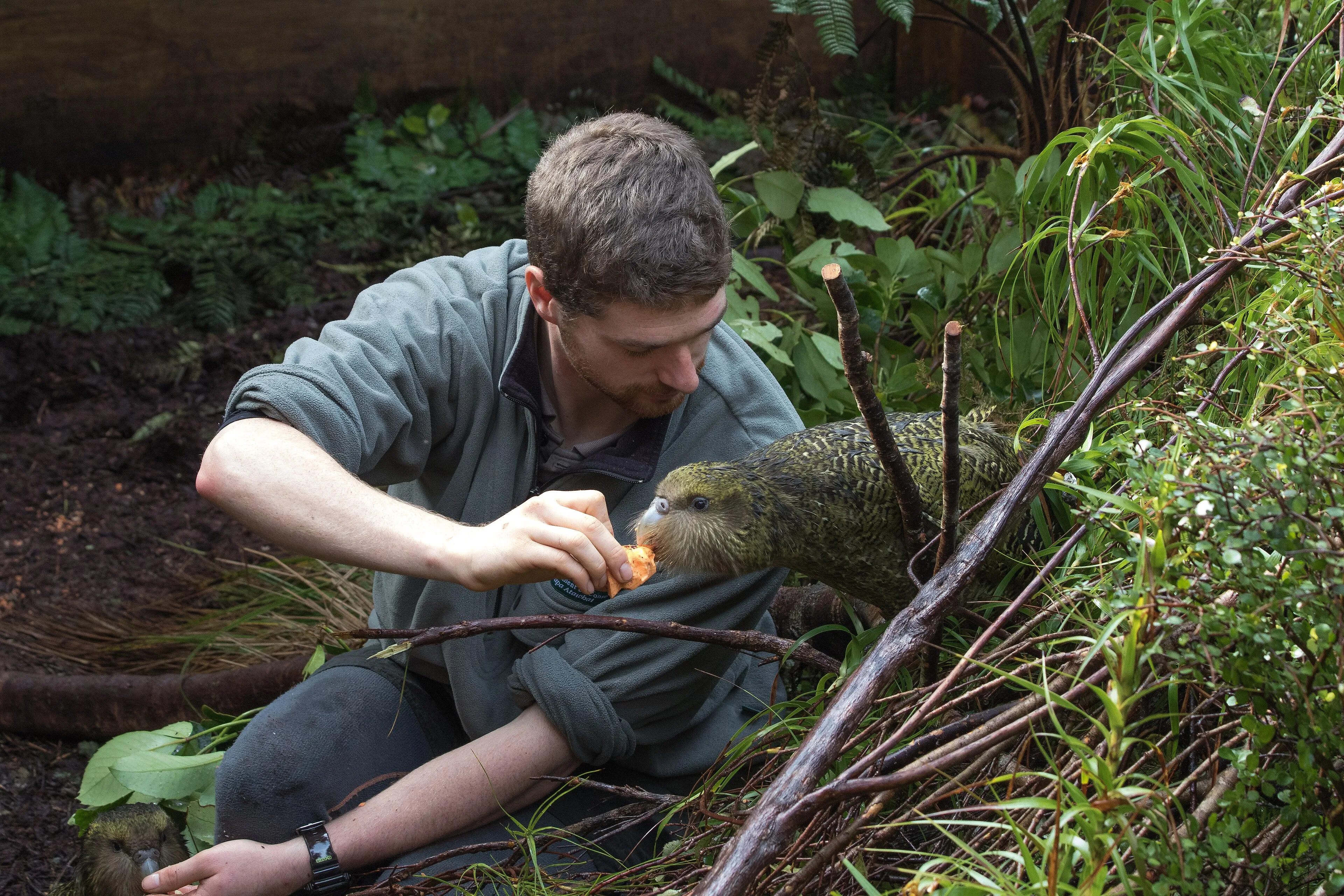
New Zealand’s Kākāpō Recovery programme, run by the Department of Conservation with the Māori iwi Ngāi Tahu and supported by Meridian Energy, looks after every kākāpō individually. Since Meridian Energy became a partner in 2016, the population has grown by more than 200 birds. The birds wear transmitters, nests are monitored remotely, and chicks that struggle receive care or extra food.
Kākāpō live on three predator-free islands: Whenua Hou (Codfish Island), off Stewart Island, plus Pukenui (Anchor Island) and Te Kāhaku (Chalky Island) in Fiordland.
The results are spectacular. In 2026, 90 chicks joined the official tally — a record for a single season. A chick is only counted once it reaches 150 days old. In the programme’s early years, it took sixteen years to produce that many chicks. On 1 September 2026, the population reached 325 birds, its highest since recovery work began. It may not have topped 300 for 75 years.
The team is even starting to step back: fewer nest checks and less supplementary feeding where the birds are coping on their own. The next challenge is finding new homes. Ngāi Tahu hopes that Stewart Island (Rakiura), where almost all the founders of today’s population came from, will one day be free of predators so kākāpō can return.
How you can help
Sauvons les animaux does not collect donations. The official recovery programme offers two ways to help:
- Symbolically adopt a kākāpō for a year (certificate and news about the bird). Adopt a kākāpō
- Donate to Kākāpō Recovery, which looks after every bird. Donate to Kākāpō Recovery
And in everyday life:
- Keep your cat indoors at night, wherever you live: pet cats are formidable bird predators.
- When visiting protected islands, follow biosecurity rules: check your bags and shoes so you don’t carry rodents or seeds.
- Share the kākāpō’s story — it shows that a species can come back from the very edge.
Support an organization
We do not collect donations. These trusted organizations work directly for this species:
-
Kākāpō Recovery — symbolic adoption
Symbolically adopt a kākāpō for a year and receive a certificate and news about "your" bird. Run by New Zealand's Department of Conservation with Ngāi Tahu.
Symbolic adoption — Kākāpō Recovery — symbolic adoption (external site, opens in a new tab) -
Kākāpō Recovery — donation
Donations go straight to the recovery programme that looks after every kākāpō.
Donate — Kākāpō Recovery — donation (external site, opens in a new tab)
In pictures
Use the left and right arrow keys to browse the photos.
-
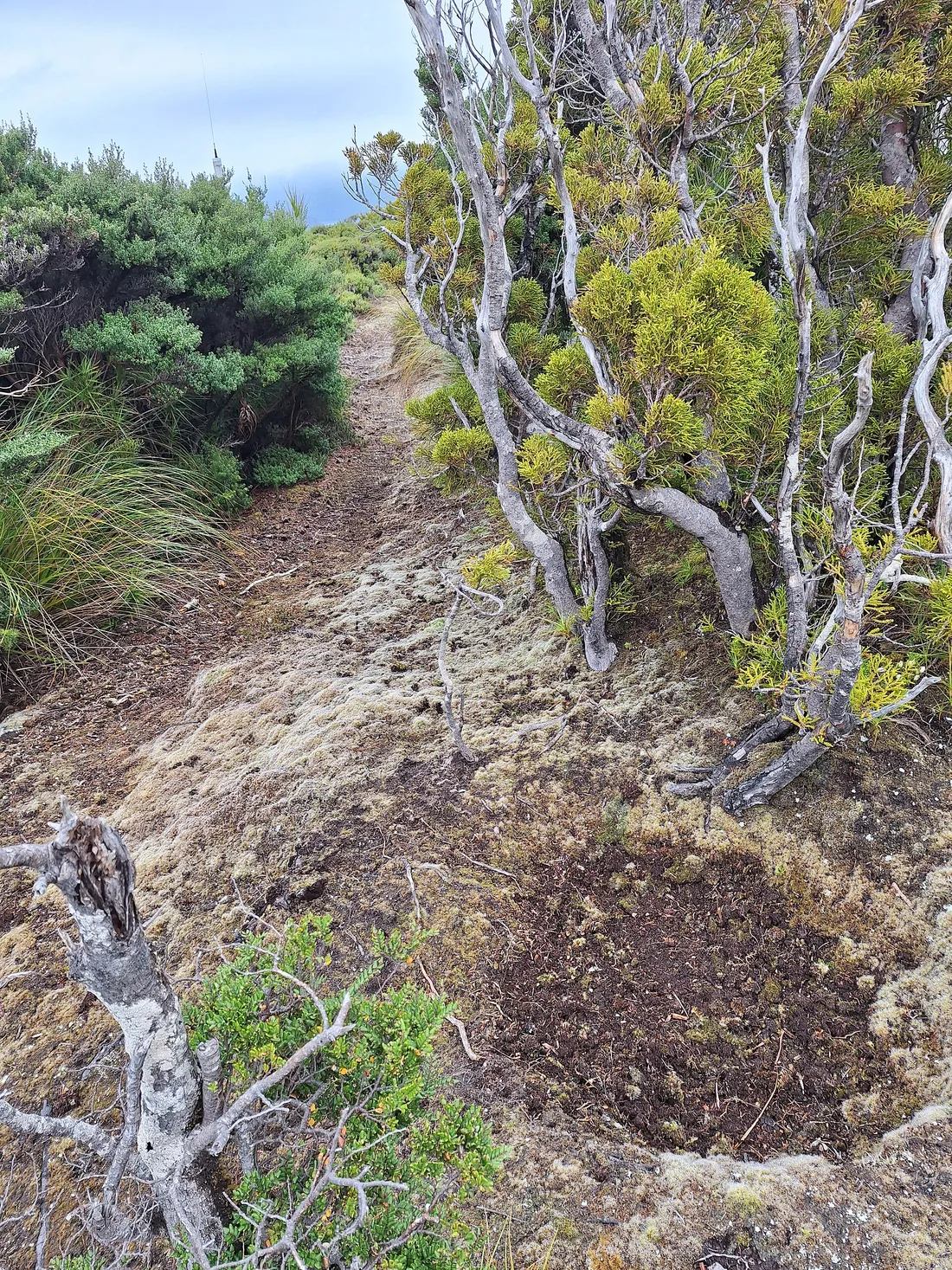
A male kākāpō's display bowl on Pukenui in 2026 — the hollow from which he booms for nights on end. Photo: Heidi Meudt, CC BY 4.0 (source) -
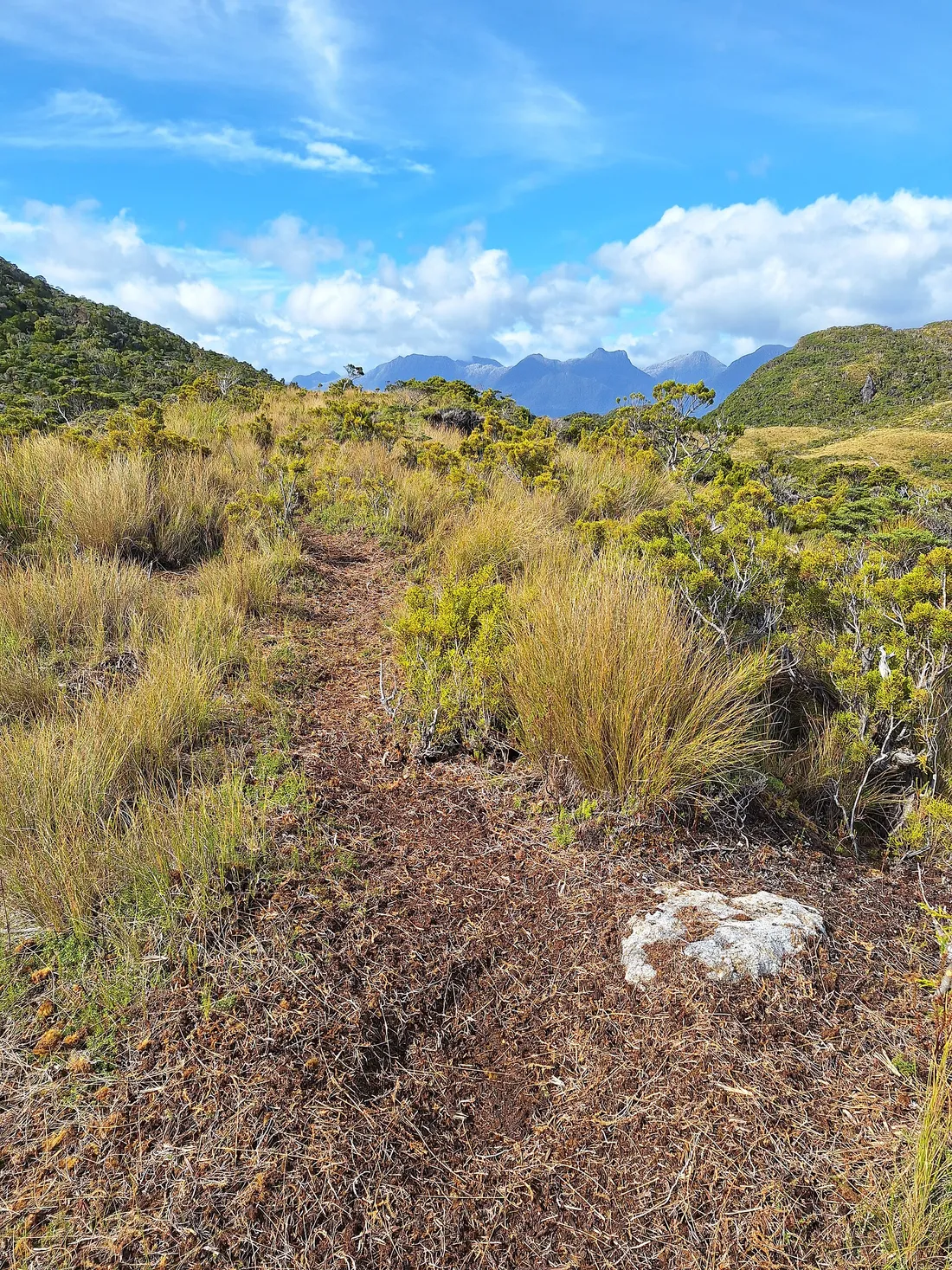
The uplands of Pukenui (Anchor Island), one of the three islands where kākāpō live, in 2026. Photo: Heidi Meudt, CC BY 4.0 (source) -
A kākāpō being cared for at Dunedin Wildlife Hospital in 2019 — every sick bird gets treatment. Photo: Kimberley Collins, CC BY 2.0 (source) -
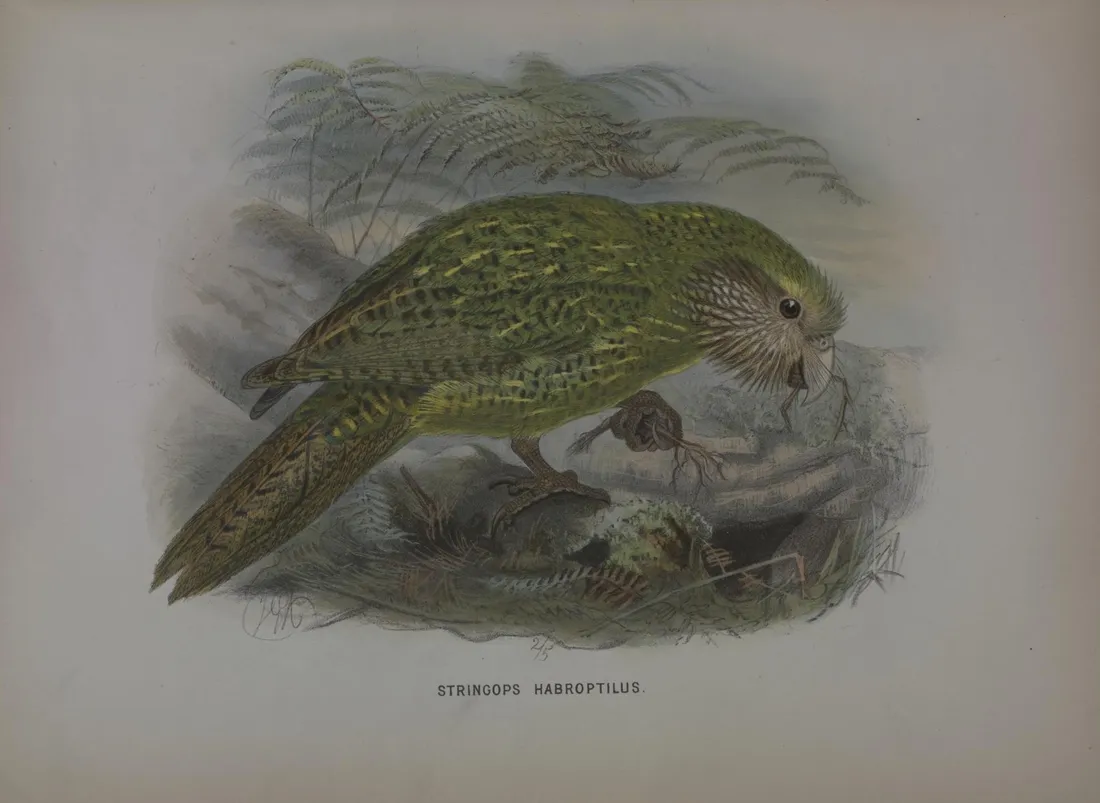
The kākāpō painted by J. G. Keulemans for Walter Buller's A History of the Birds of New Zealand, 1873. Photo: J. G. Keulemans (illustration), W. L. Buller, Public domain (source)


Share this page
Sources
- Strigops habroptilus — Red List assessment (2018), IUCN, accessed .
- Kākāpō population reaches new milestone (1 September 2026), Department of Conservation (New Zealand), accessed .
- New Zealand's quirky kākāpō are pulled back from extinction, Natural History Museum (London), accessed .
- Kākāpō behaviour, Department of Conservation (New Zealand), accessed .
- Adopt a kākāpō, Department of Conservation (New Zealand), accessed .
Photo credits
- A young kākāpō on Anchor Island (Pukenui), Fiordland, in 2016. Photo: Kimberley Collins, CC BY 2.0 (source)
- A kākāpō can weigh up to 4 kilos — the heaviest parrot in the world. Photo: Oscar Dove, CC BY 4.0 (source)
- Theo, a Department of Conservation ranger, feeds a young kākāpō on Anchor Island in 2016. Photo: Kimberley Collins, CC BY 2.0 (source)
- A male kākāpō's display bowl on Pukenui in 2026 — the hollow from which he booms for nights on end. Photo: Heidi Meudt, CC BY 4.0 (source)
- The uplands of Pukenui (Anchor Island), one of the three islands where kākāpō live, in 2026. Photo: Heidi Meudt, CC BY 4.0 (source)
- A kākāpō being cared for at Dunedin Wildlife Hospital in 2019 — every sick bird gets treatment. Photo: Kimberley Collins, CC BY 2.0 (source)
- The kākāpō painted by J. G. Keulemans for Walter Buller's A History of the Birds of New Zealand, 1873. Photo: J. G. Keulemans (illustration), W. L. Buller, Public domain (source)


Updated on
Discover other species
-
-
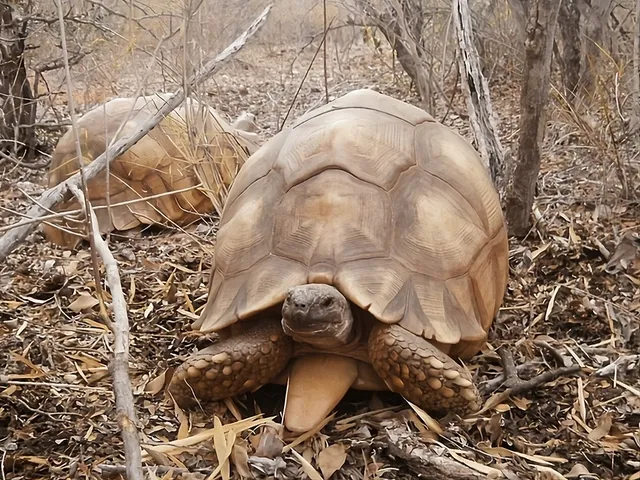
Critically Endangered Reptile
Ploughshare tortoise (angonoka)
Astrochelys yniphora
Population: 50–100 (2025)
-