Fish · Freshwater
Devils Hole pupfish: the fish that lives in a single pool
Picture an entire species living in a pool the size of a living room. The Devils Hole pupfish, a tiny blue fish from the Nevada desert, exists in the wild in just one flooded cavern. In 2025, two distant earthquakes nearly wiped it off the map.
20 m² the area of the small rock shelf where the species feeds and breeds (about 215 sq ft)
Meet the Devils Hole pupfish
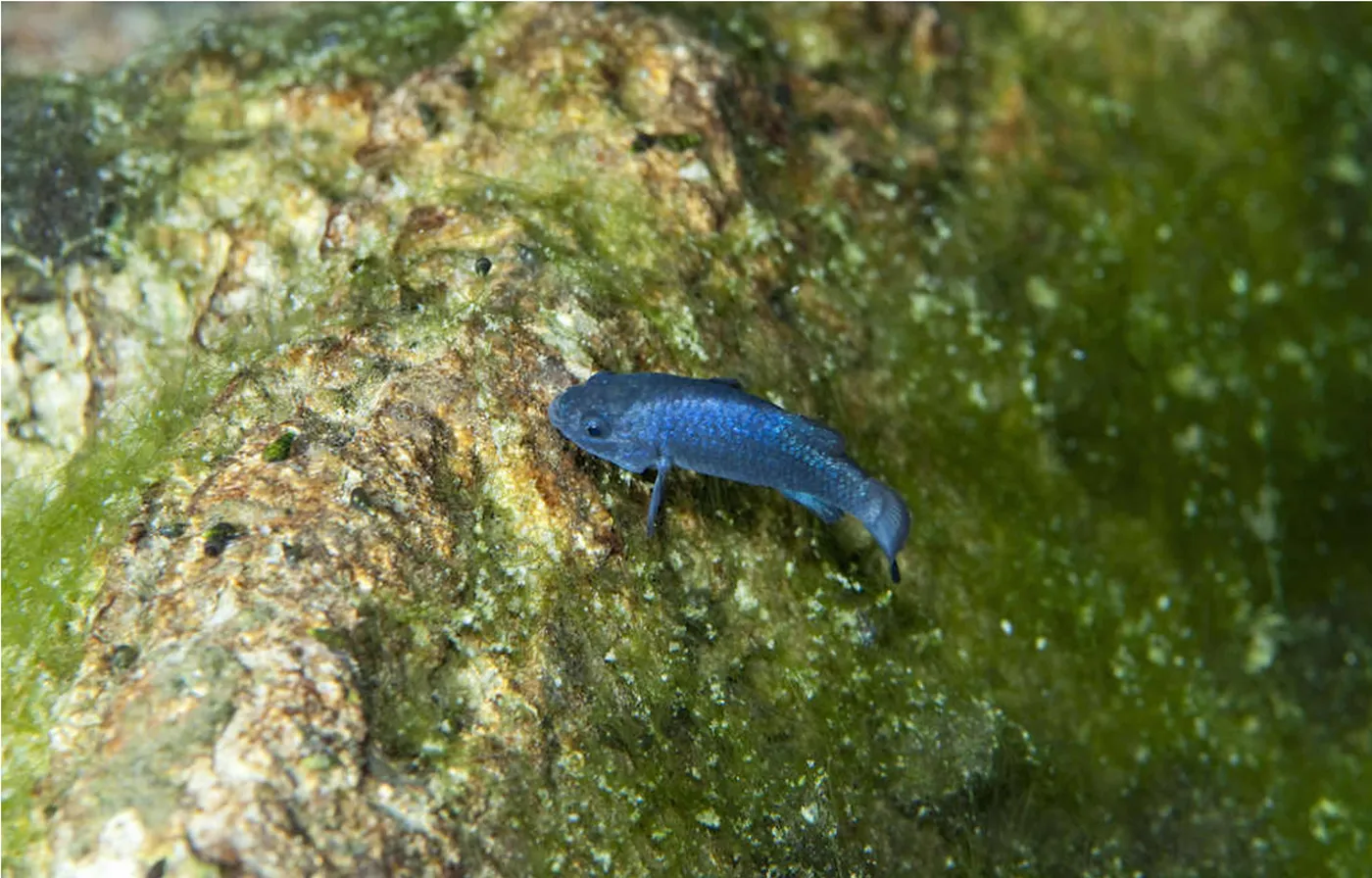
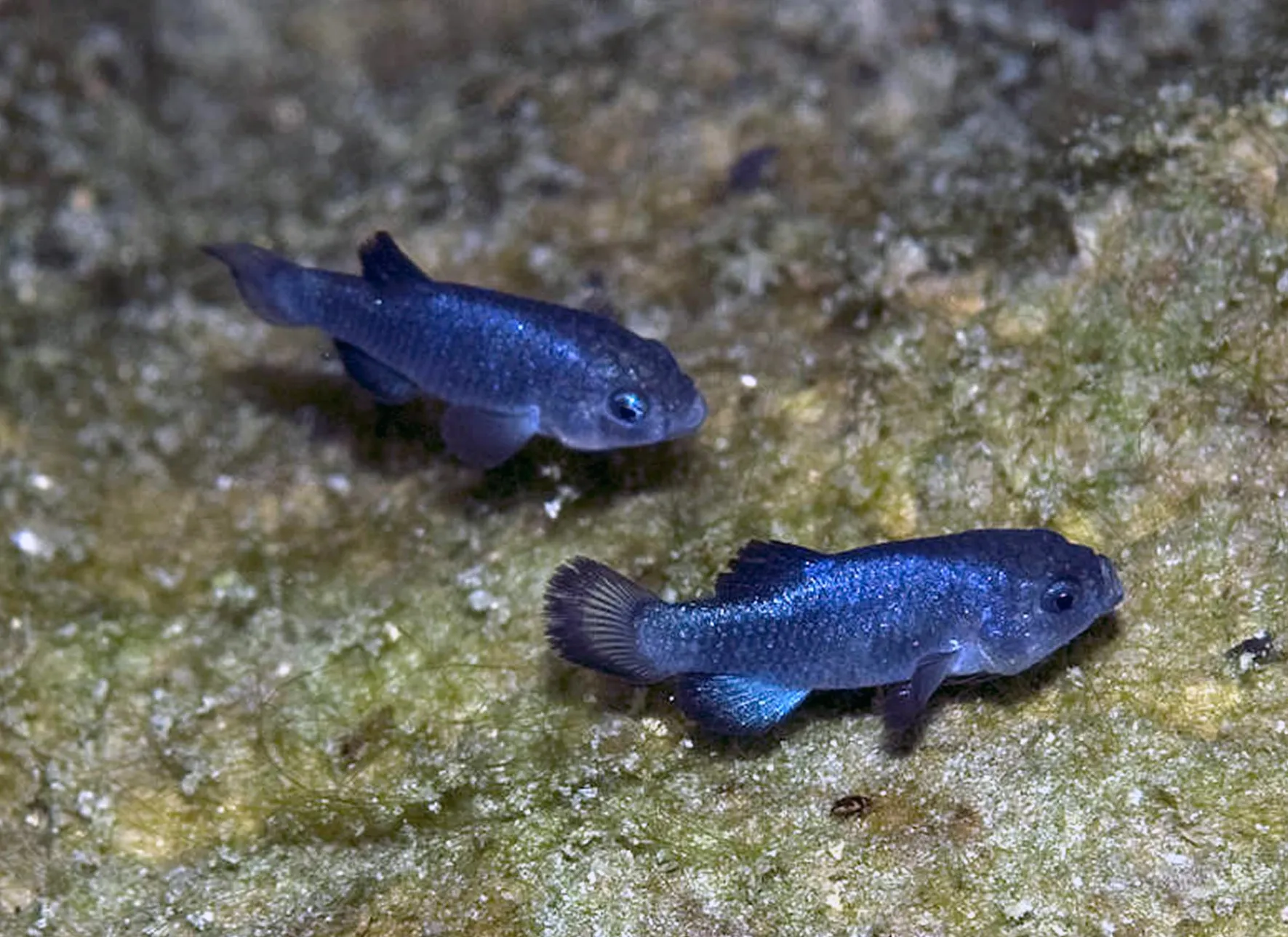
The Devils Hole pupfish is a tiny fish: adults are barely 2.5 to 4 centimetres long (1 to 1.5 inches). Males shimmer an iridescent blue, while females are a more discreet olive green.
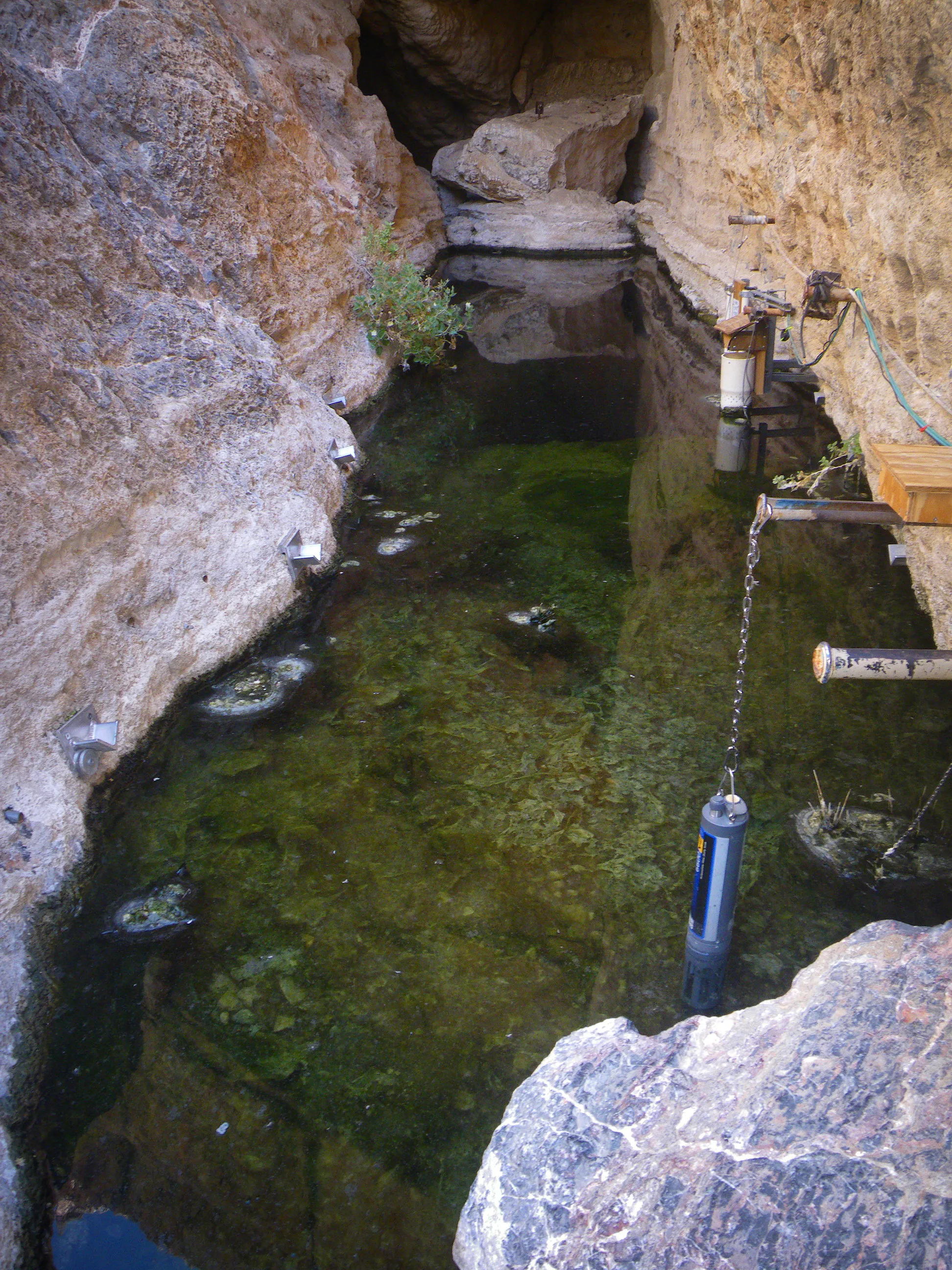
Its whole world is a water-filled limestone cavern called Devils Hole, in the Nevada desert in the United States. The site is part of Death Valley National Park and sits inside Ash Meadows National Wildlife Refuge. The water stays at around 33 °C (92 °F) all year round and is poor in food and oxygen. Divers have explored the cavern to about 137 metres (450 feet) deep without ever finding the bottom.
Yet the fish uses only a tiny part of this chasm: a small, shallow rock shelf of about 20 m², lit by the sun. That is where the algae it feeds on grow, and where it lays its eggs.
Did you know? According to park biologists, Devils Hole is probably the smallest known natural habitat of any vertebrate species. This fish has lived there, in isolation, for thousands of years.
Why it is endangered
Living in a single pool makes the species vulnerable to the slightest mishap. In the late 1960s, the water level above the shelf began to drop. The species was protected from 1967, and in 1976 the US Supreme Court recognised a water right that protects the level the fish needs.
Since 1972, biologists have counted the fish every spring and autumn, from the surface and by scuba diving. Until the mid-1990s, they counted an average of 200 in spring and 425 in autumn. Numbers then fell to around 90 in the early 2000s, and to 35 in 2013. The population climbed back to 212 fish in autumn 2024, a high not seen in decades.
Then nature struck from afar. In December 2024 and February 2025, two distant earthquakes set off real “mini-tsunamis” inside the cavern. The waves swept across the shelf, washing away the algae and the eggs. In midwinter, with no direct sunlight, the algae could not grow back. During a dive in March 2025, only about twenty fish were left.
What is being done to save it
A team bringing together the National Park Service, the U.S. Fish and Wildlife Service and the Nevada Department of Wildlife watches over the species. Since 2007, it has been giving the fish extra food, and it stepped this up immediately after the crisis. It draws on a strategic plan adopted in 2022. By April 2025, biologists were already seeing spawning behaviour and algae growing back, which the Nevada Department of Wildlife called “really encouraging”.
Above all, the species has a lifeboat. Since 2013, the Ash Meadows Fish Conservation Facility has housed a 100,000-gallon (380,000-litre) tank that recreates the shelf and the cavern. Built with a federal grant, its first purpose is simple: to make sure the species never goes extinct. Several hundred pupfish live there. In March 2025, for the first time, biologists released captive-bred fish into Devils Hole: 19 at first, then around fifty more.
The gamble paid off. In spring 2026, biologists counted 77 fish — nearly four times as many as in March 2025 — with plenty of young. “I think we saved the species,” says biologist Michael Schwemm. “We’re breathing a lot easier,” adds his colleague Olin Feuerbacher. Some caution remains. In the rush, the first fish released were not sampled for DNA, and the mixing could reduce the genetic diversity of the wild population. Geneticist Christopher Martin nonetheless believes managers “made the best decision that they could under the extreme pressure” they faced. Since then, every fish released has been sampled, and a genetic management plan is in the works.
How you can help
Sauvons les animaux does not collect donations. Few private organisations work specifically for this fish, which is protected mainly by government agencies. You can support the park that is home to it:
- Death Valley Natural History Association, the official partner of Death Valley National Park. Donate to the DVNHA
- Death Valley National Park, which accepts donations directly. Donate to the park
And in everyday life:
- Save water, especially in dry regions. The pupfish’s survival depends on the level of the desert’s groundwater.
- Never release aquarium animals into the wild: in desert springs, a single introduced species can wipe out unique wildlife.
- Spread the word about this fish: it shows that a species can hold on in a tiny space — as long as we protect it.
Support an organization
We do not collect donations. These trusted organizations work directly for this species:
-
Death Valley Natural History Association
Official partner of Death Valley National Park, which manages Devils Hole. Donations support park programmes and are not limited to the pupfish.
Donate — Death Valley Natural History Association (external site, opens in a new tab) -
Death Valley National Park
The park accepts donations directly and can direct them to specific programmes.
Donate — Death Valley National Park (external site, opens in a new tab)
In pictures
Use the left and right arrow keys to browse the photos.
-
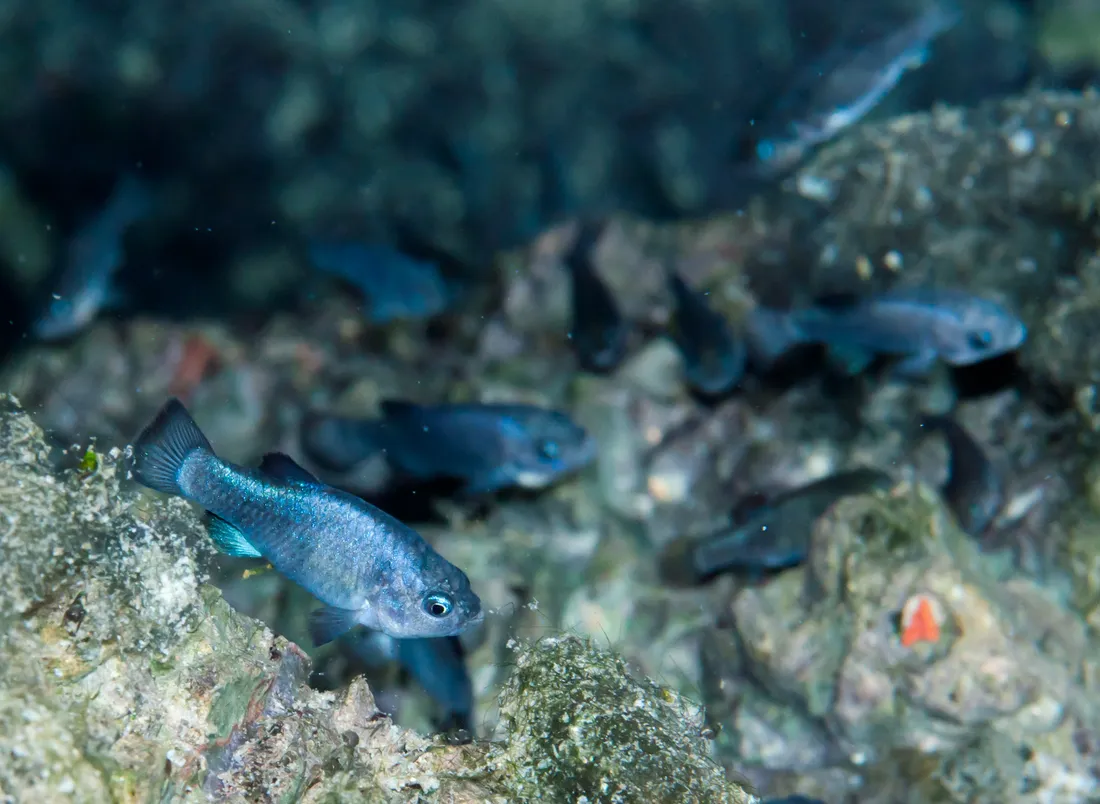
A small group of males in Devils Hole, 2011. Photo: Olin Feuerbacher (National Park Service), Public domain (source) -
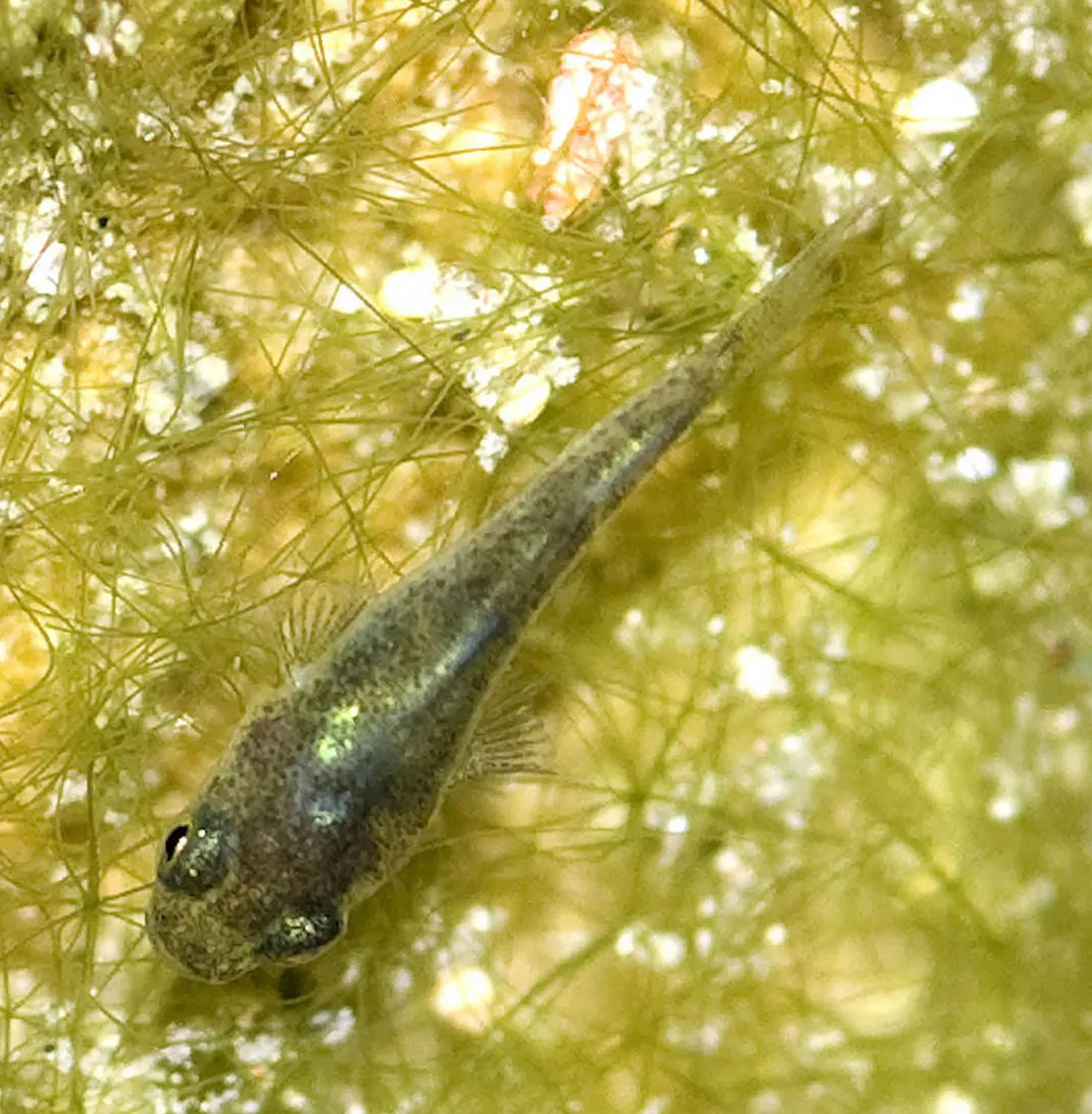
A Devils Hole pupfish larva. Every birth counts for this species. Photo: Olin Feuerbacher / U.S. Fish and Wildlife Service, Public domain (source) -
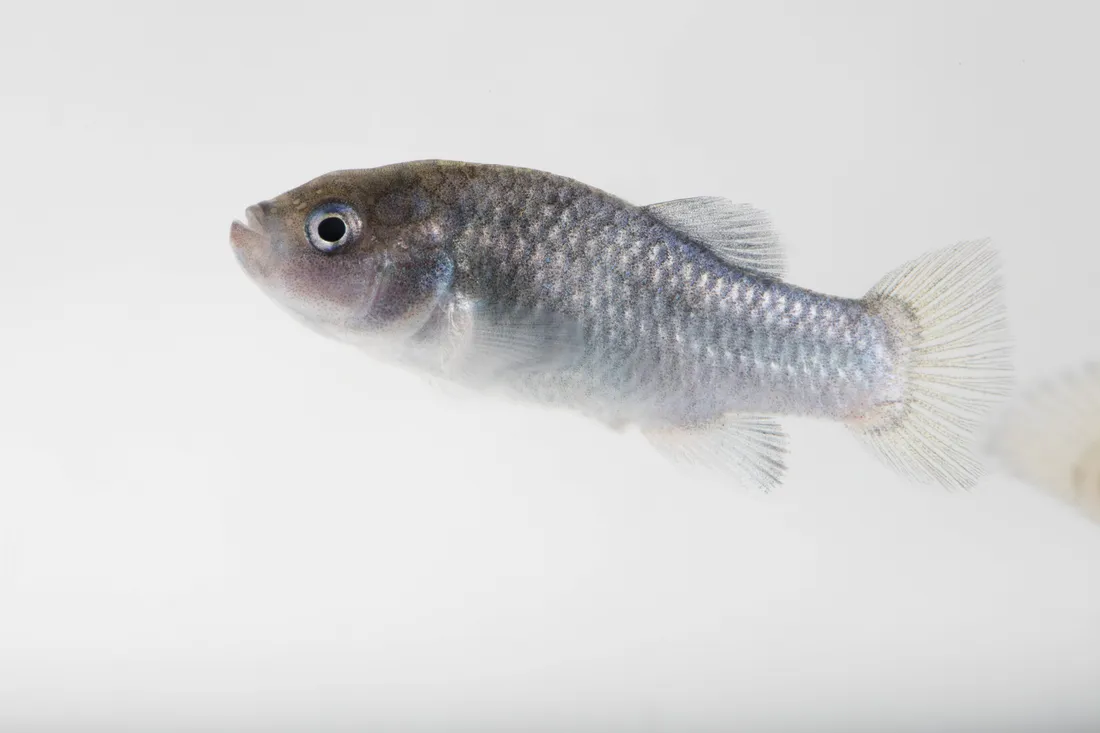
A captive-born Devils Hole pupfish, 2019. Several hundred live at the Ash Meadows conservation facility. Photo: U.S. Fish and Wildlife Service, Fish and Aquatic Conservation, Public domain (source) -
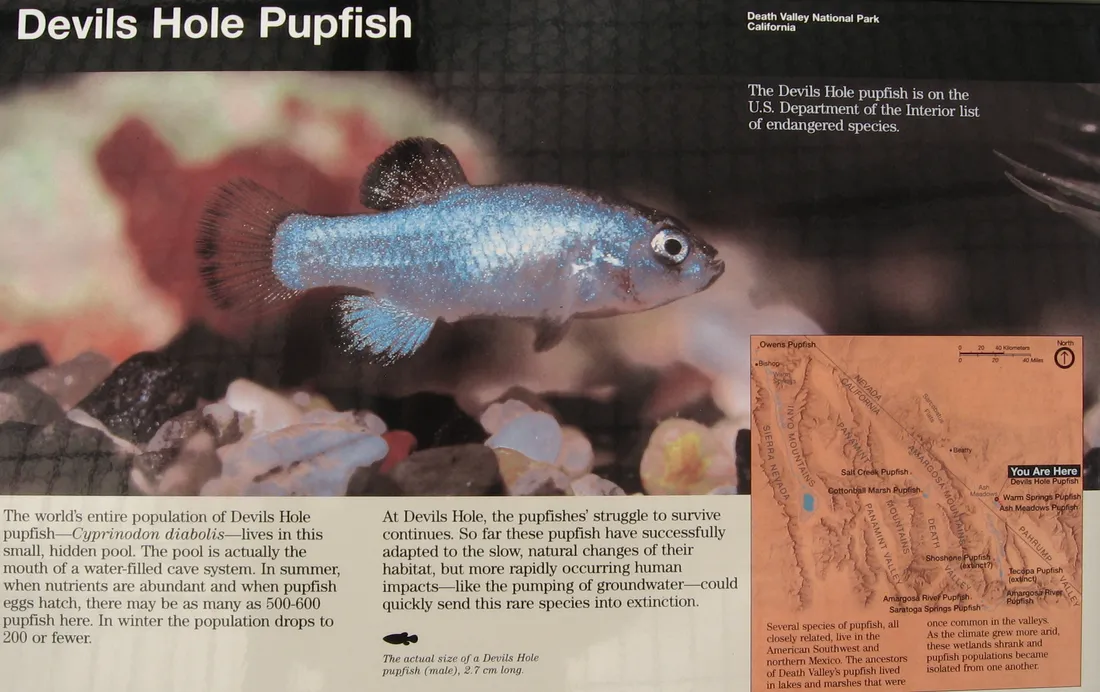
The information sign near Devils Hole, 2011. Photo: Ken Lund, CC BY-SA 2.0 (source)
Share this page
Sources
- Cyprinodon diabolis — Red List assessment (2014), UICN, accessed .
- As federal scientists faced turmoil, the Devils Hole pupfish reached a crisis point (7 May 2026), NPR / NHPR, accessed .
- Inside Devils Hole: mysterious depths, an endangered fish, and an unwavering partnership, U.S. Fish and Wildlife Service, accessed .
- Devils Hole pupfish spring count (news release, 15 April 2025), National Park Service, accessed .
- Make a Donation — Death Valley National Park, National Park Service, accessed .
Photo credits
- A male Devils Hole pupfish, recognisable by its bright blue colour. Photo: Olin Feuerbacher / U.S. Fish and Wildlife Service, Public domain (source)
- Two males photographed in Devils Hole in 2010. They are barely 2.5 to 4 centimetres long. Photo: Olin Feuerbacher / U.S. Fish and Wildlife Service, Public domain (source)
- Devils Hole, a water-filled limestone cavern in the Nevada desert, in 2014. Photo: U.S. Fish and Wildlife Service, Pacific Southwest Region, Public domain (source)
- A small group of males in Devils Hole, 2011. Photo: Olin Feuerbacher (National Park Service), Public domain (source)
- A Devils Hole pupfish larva. Every birth counts for this species. Photo: Olin Feuerbacher / U.S. Fish and Wildlife Service, Public domain (source)
- A captive-born Devils Hole pupfish, 2019. Several hundred live at the Ash Meadows conservation facility. Photo: U.S. Fish and Wildlife Service, Fish and Aquatic Conservation, Public domain (source)
- The information sign near Devils Hole, 2011. Photo: Ken Lund, CC BY-SA 2.0 (source)
Updated on