Bird · Land
Blue-eyed ground dove: found again after 74 years, still on the brink
It was feared lost for more than 70 years — until, in 2015, an ornithologist recognised its song in the hills of Brazil. Today the blue-eyed ground dove numbers barely ten adults in the wild. A network of conservationists has rallied to protect it.
5 breeding pairs known in the wild in 2025 — the highest number ever recorded
Meet the blue-eyed ground dove
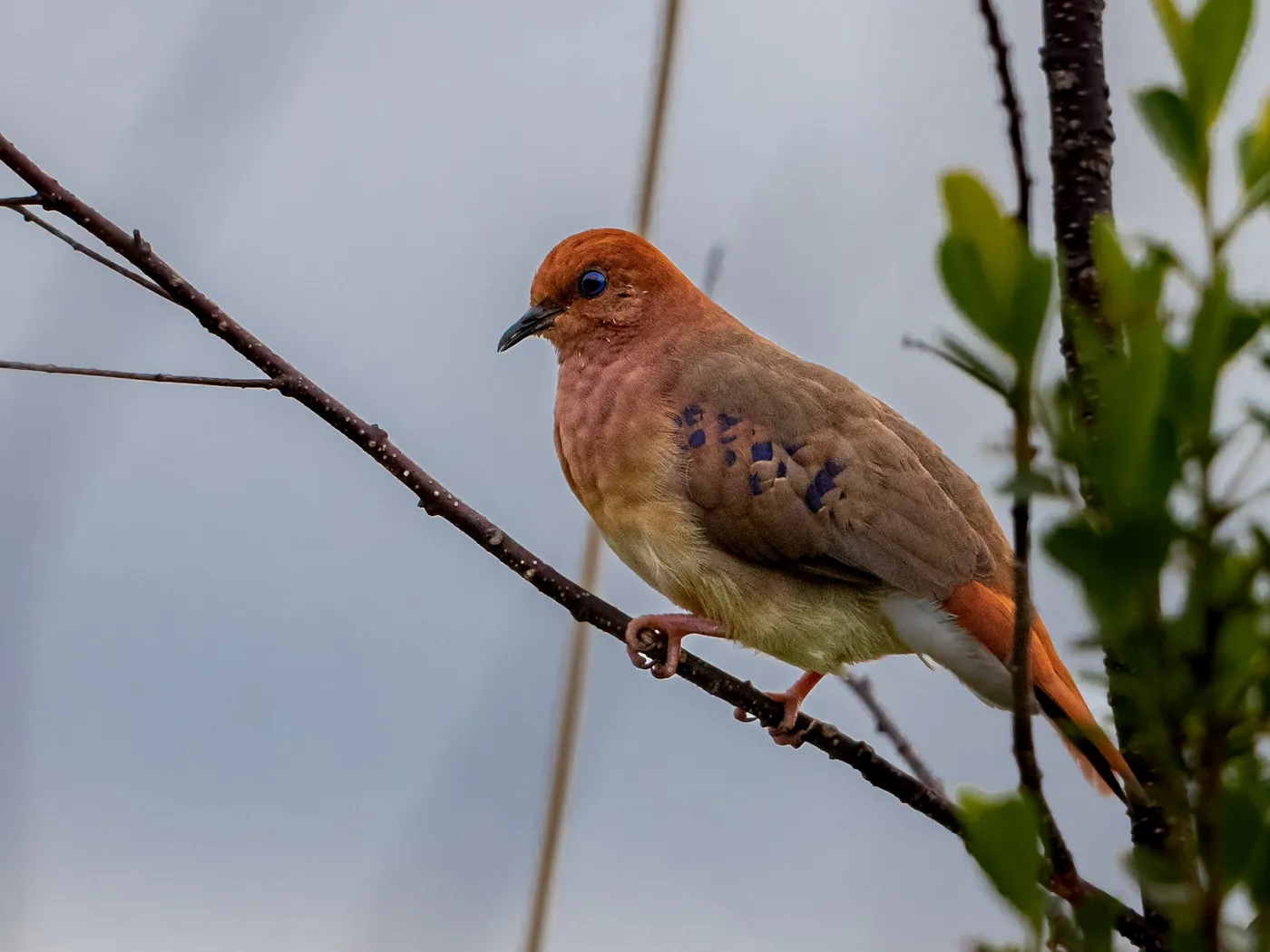
The blue-eyed ground dove is a small ground-dwelling dove from Brazil, known in Portuguese as the rolinha-do-planalto. Its plumage mixes reddish-brown and white. But two details make it unique: its striking cobalt-blue eyes, and small spots of the same blue on its wings.
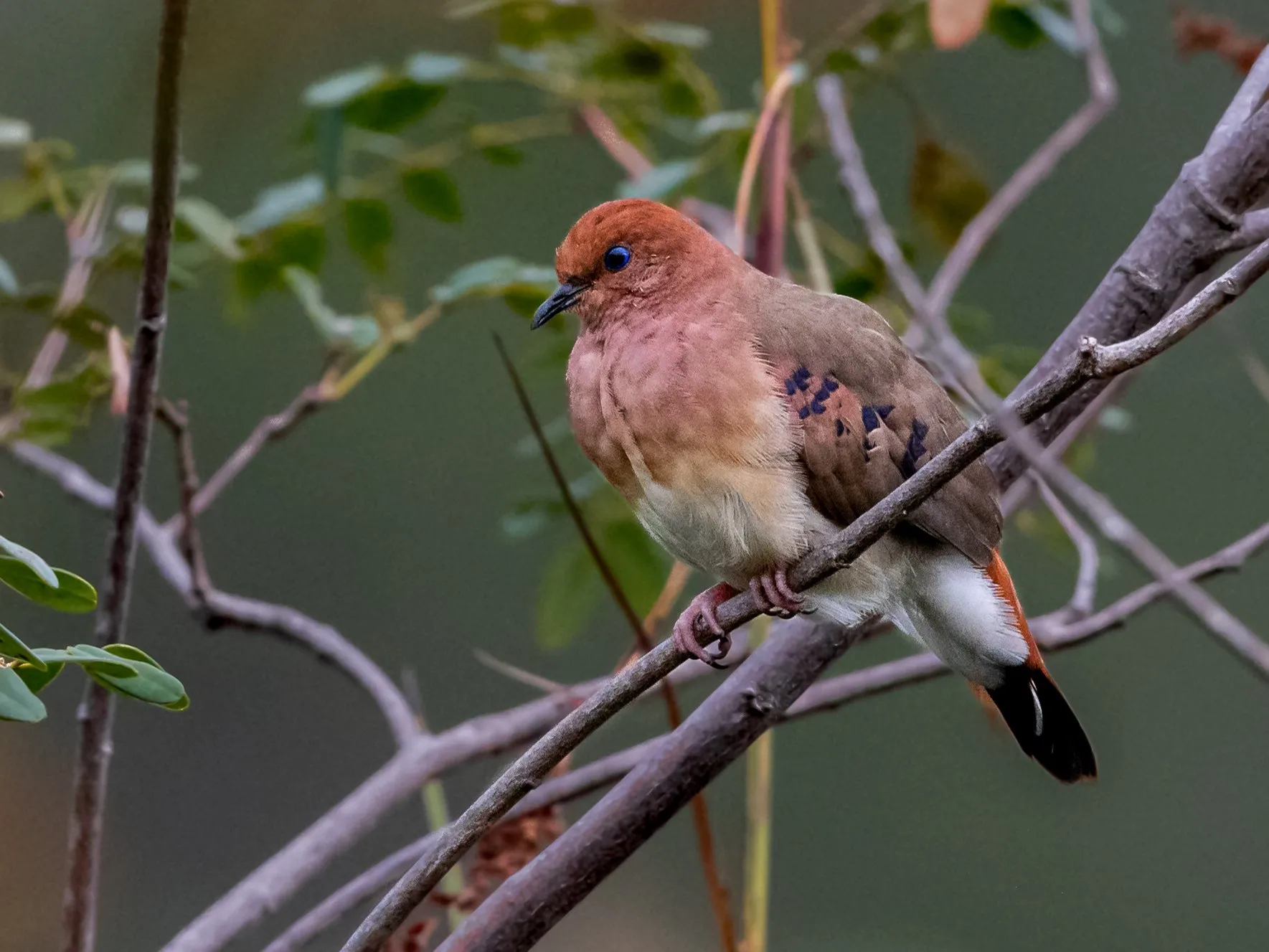
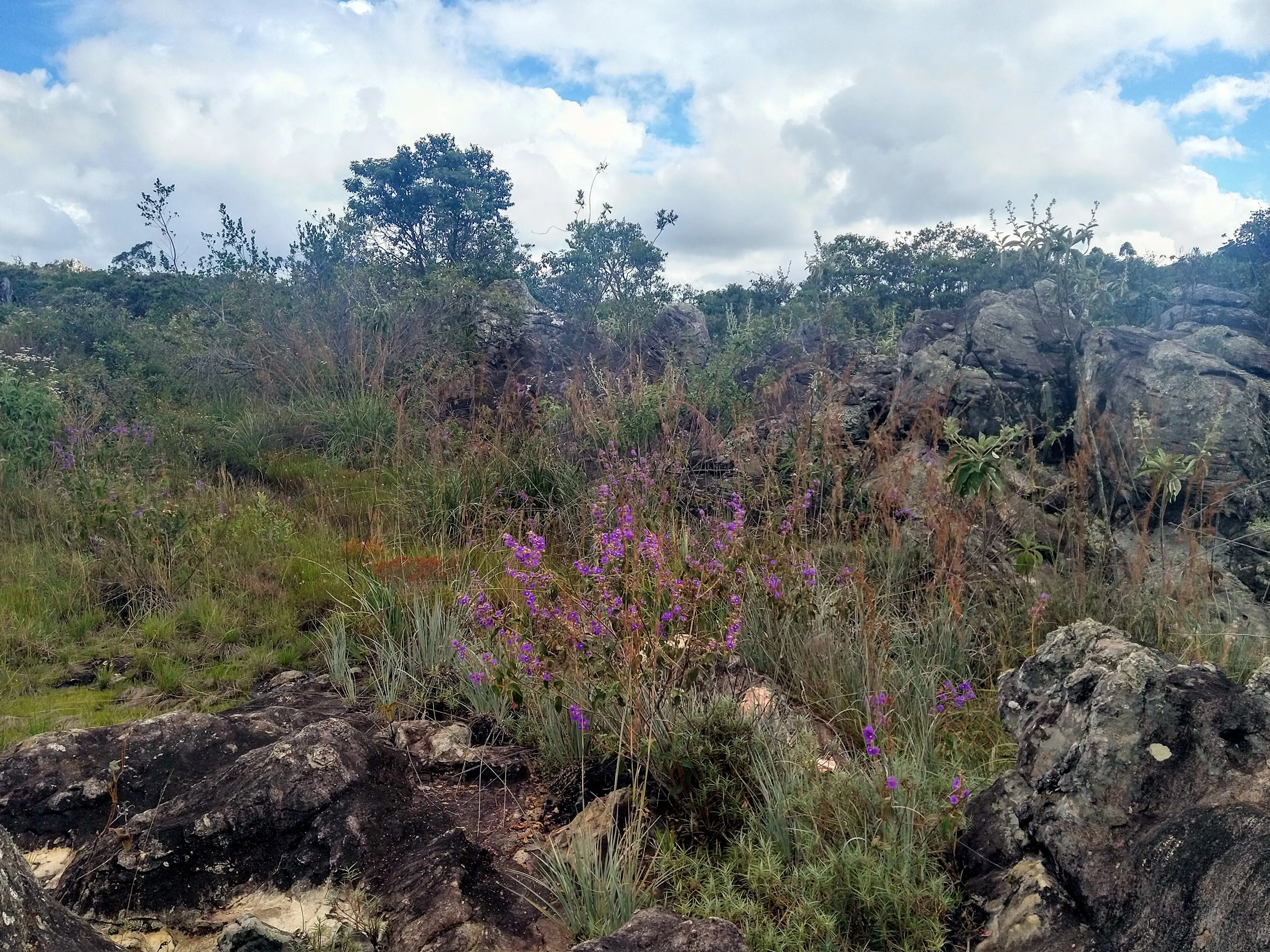
It lives in the Cerrado, the vast savannah of central Brazil — more precisely in the campos rupestres: landscapes of quartzite outcrops, white sands, cacti and “everlasting” flowers, criss-crossed by iron-rich streams. It needs water-rich places such as veredas, the Cerrado’s typical wetlands. It feeds on the ground on small grains and seeds.
Much of its biology remains unknown. Although science described it as early as 1870, it had only been seen a handful of times before it vanished from view. So little is known, in fact, that researchers still cannot say exactly why it became so rare.
Did you know? When it was rediscovered, the blue-eyed ground dove turned up more than 1,000 kilometres from where it had last been seen, back in the 1940s. That’s a bit like searching for a lost animal in London and finding it in Milan.
Why it is endangered
For more than 70 years, nobody could prove the species still existed. The last specimens had been collected between 1939 and 1941, in the south of Goiás state. Then, in 2015, ornithologist Rafael Bessa recorded an unfamiliar song in the campos rupestres of Botumirim, in Minas Gerais. He played it back the next morning and finally saw the bird that had been singing: it was the blue-eyed ground dove. Only about a dozen birds were known at the time.
Counts have varied since then: 25 birds in spring 2020, 31 in 2021. But in 2025, Chester Zoo, a partner in the programme, reported fewer than 11 adults known in the wild. That same year, SAVE Brasil counted five breeding pairs, the highest number ever recorded. The species lives only around Botumirim: a single disaster could be enough to wipe it out.
Its main threats are:
- Fire, often set to turn the Cerrado into cattle pasture. Climate change adds further pressure.
- Habitat loss to farming and timber plantations.
- Disturbance. In 2025, SAVE Brasil noticed that the birds were hiding more when people were around, and suspended visits to the reserve. The birds were also using denser vegetation and shifting their territories.
What is being done to save it
Shortly after the rediscovery, the Brazilian organisation SAVE Brasil, a BirdLife International partner, bought around 600 hectares with support from Rainforest Trust. In January 2018, it created the Rolinha-do-planalto Nature Reserve there. In July 2018, the Botumirim State Park, covering around 36,000 hectares, was created around it. SAVE Brasil has also trained firefighting brigades.
In the field, researchers keep track of every bird. In 2020, a nest specialist found four active nests, three of them with eggs, and a camera filmed one of them. To find birds more easily, teams search during the season when males sing, and plan to place automatic sound recorders in remote areas.
Alongside this, a conservation breeding programme was set up at Parque das Aves in Brazil, with Chester Zoo, SAVE Brasil, the Toledo and Bronx zoos, and geneticists from the University of São Paulo. Chicks hatched there in 2023, 2024 and 2025. In 2025, three chicks were hand-reared with round-the-clock care. Six birds now live in the programme. “This unique species is on the brink of extinction,” warns Andrew Owen, head of birds at Chester Zoo. As Paloma Bosso of Parque das Aves puts it, each hatching represents “a real chance to reverse the fate of this species”. Her colleague Ben Phalan stresses that the dove’s survival depends on the efforts of many people and institutions, so that its song can be heard in the Cerrado for years to come.
How you can help
Sauvons les animaux does not collect donations. These recognised organisations work for the blue-eyed ground dove:
- American Bird Conservancy supports SAVE Brasil’s fieldwork. Donate to American Bird Conservancy
- Chester Zoo takes part in the conservation breeding programme. Support Chester Zoo
And in everyday life:
- Respect the peace of rare species: if you go birdwatching, don’t use recordings to lure birds in sensitive areas, and follow reserve rules.
- Never light fires in the wild during the dry season, in Brazil or anywhere else.
- Choose beef, soy and wood from deforestation-free supply chains, because converting the Cerrado threatens all its wildlife.
Support an organization
We do not collect donations. These trusted organizations work directly for this species:
-
American Bird Conservancy
Supports the work of SAVE Brasil, BirdLife International's partner, to monitor and protect the blue-eyed ground dove and its reserve.
Donate — American Bird Conservancy (external site, opens in a new tab) -
Chester Zoo
Works with Parque das Aves and SAVE Brasil on the conservation breeding programme that produced chicks in 2023, 2024 and 2025.
Donate — Chester Zoo (external site, opens in a new tab)
In pictures
Use the left and right arrow keys to browse the photos.
-
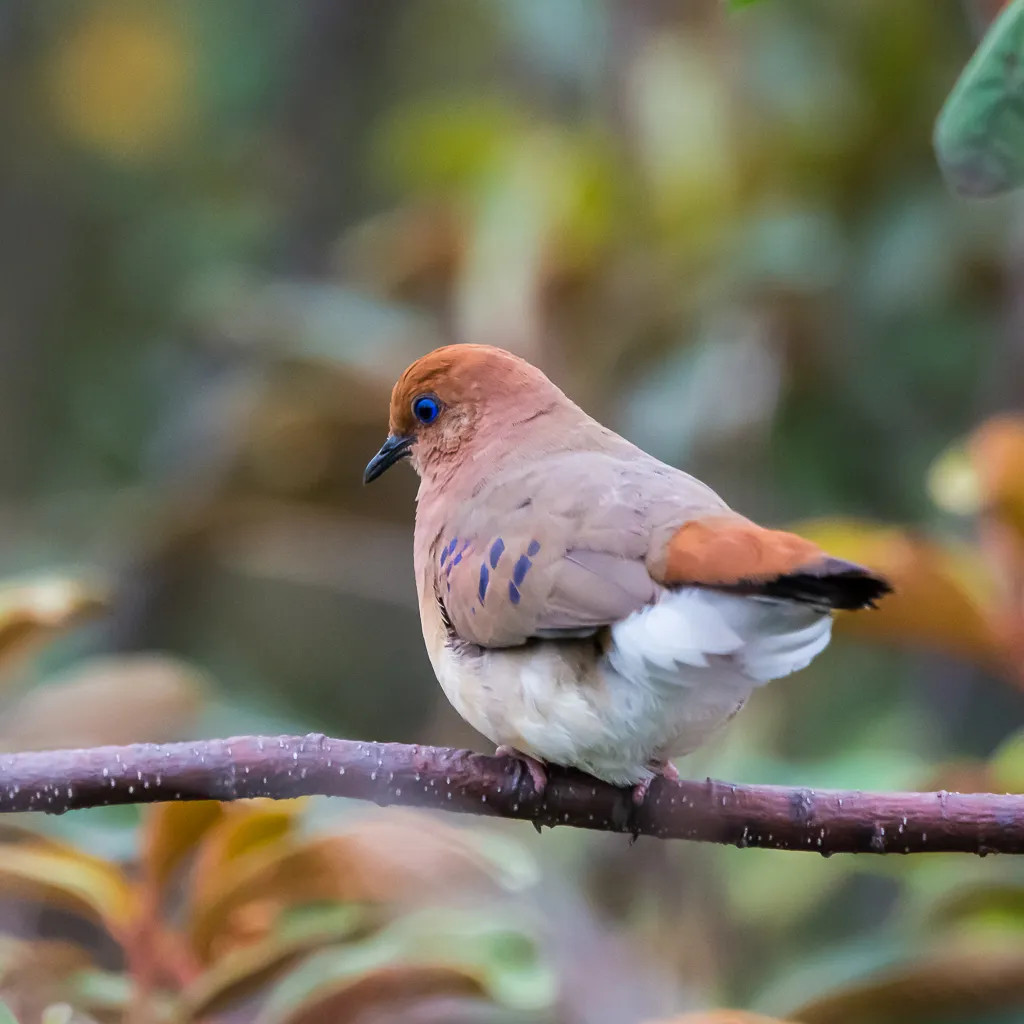
A blue-eyed ground dove photographed in Brazil in 2019. Photo: Nina Wenóli, CC0 (source) -
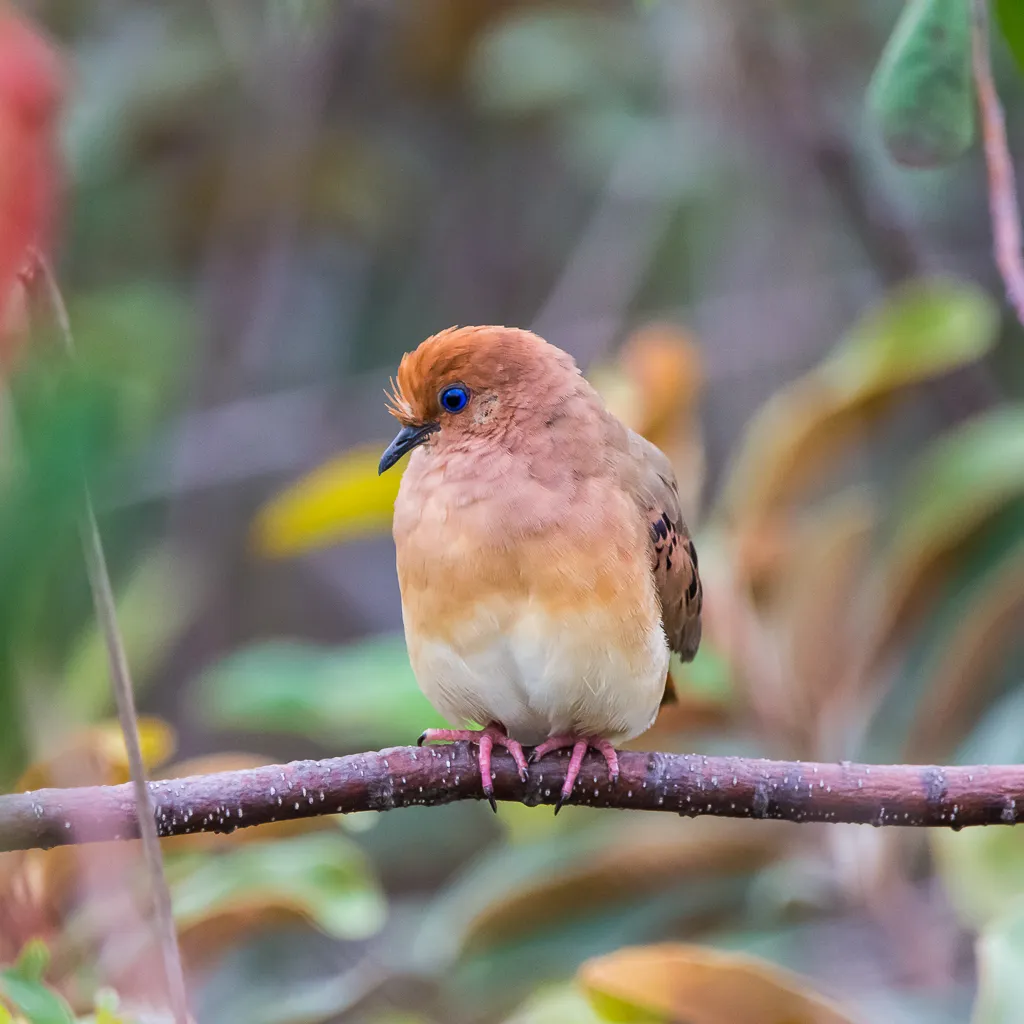
Fewer than a dozen adults are known in the wild. Photo: Nina Wenóli, CC0 (source) -
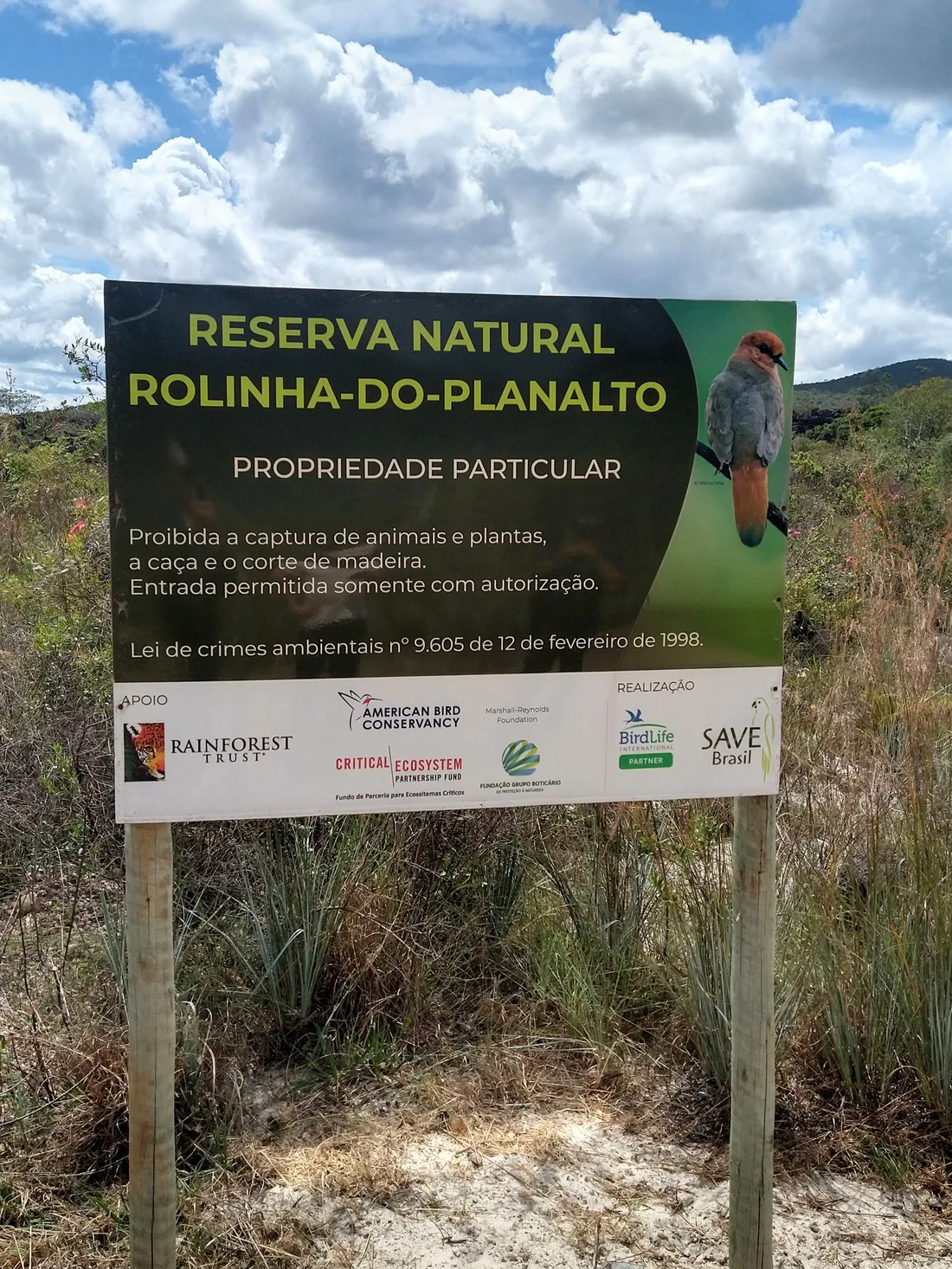
The entrance to the Rolinha-do-planalto Nature Reserve, created in 2018 by SAVE Brasil to protect the species. Photo: Hector Bottai, CC BY-SA 4.0 (source) -
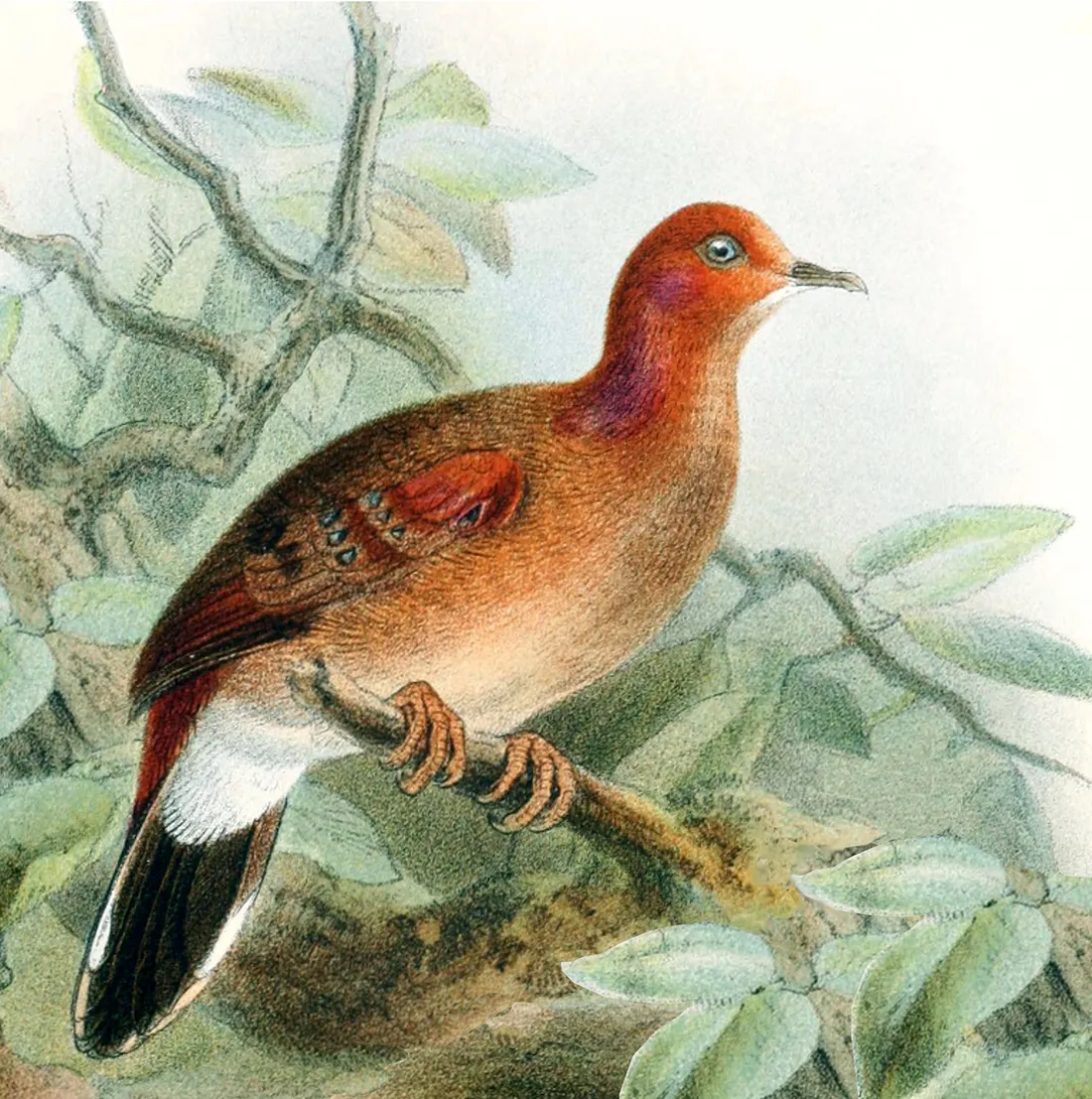
The blue-eyed ground dove drawn by J. G. Keulemans for the British Museum's Catalogue of Birds, 1893. Photo: John Gerrard Keulemans, Public domain (source)
Share this page
Sources
- Columbina cyanopis — Red List assessment (2019), IUCN / BirdLife International, accessed .
- One of the world's rarest bird species successfully hand-reared (18 June 2025), Chester Zoo, accessed .
- Nota — Visitas à Reserva da rolinha-do-planalto estão suspensas em 2025 (11 April 2025), SAVE Brasil, accessed .
- A redescoberta da rolinha-do-planalto, símbolo para a conservação do Espinhaço mineiro, ((o))eco, accessed .
- Rolinha-do-planalto: população de 31 indivíduos em todo o Brasil (31 March 2021), CEPF Cerrado, accessed .
- One of the World's Rarest Birds Edges Toward Rebound in Brazil (2020), American Bird Conservancy, accessed .
Photo credits
- A blue-eyed ground dove in the Rolinha-do-planalto Nature Reserve, Botumirim (Brazil), in 2023. Photo: Hector Bottai, CC BY-SA 4.0 (source)
- Reddish-brown plumage, a cobalt-blue eye and small blue spots on the wings: the species' signature. Photo: Hector Bottai, CC BY-SA 4.0 (source)
- The blue-eyed ground dove's habitat at Botumirim: open campos rupestres, highly exposed to fire. Photo: Hector Bottai, CC BY-SA 4.0 (source)
- A blue-eyed ground dove photographed in Brazil in 2019. Photo: Nina Wenóli, CC0 (source)
- Fewer than a dozen adults are known in the wild. Photo: Nina Wenóli, CC0 (source)
- The entrance to the Rolinha-do-planalto Nature Reserve, created in 2018 by SAVE Brasil to protect the species. Photo: Hector Bottai, CC BY-SA 4.0 (source)
- The blue-eyed ground dove drawn by J. G. Keulemans for the British Museum's Catalogue of Birds, 1893. Photo: John Gerrard Keulemans, Public domain (source)
Updated on