Mammal · Marine
North Atlantic right whale: a giant to protect, all the way up the St. Lawrence
It can grow to 16 metres, yet fewer than 400 remain. The North Atlantic right whale dies mostly because of two things: fishing ropes and ships. Since 2020, its numbers have slowly been climbing again.
384 right whales estimated in 2024, up from a low of 358 in 2020
Meet the North Atlantic right whale
The North Atlantic right whale can reach 16 metres in length and weigh several tens of tonnes. Its massive body is almost entirely black, sometimes with a few white patches on the belly. It has no dorsal fin, and its V-shaped blow can rise five metres into the air — two clues that give it away from a distance.
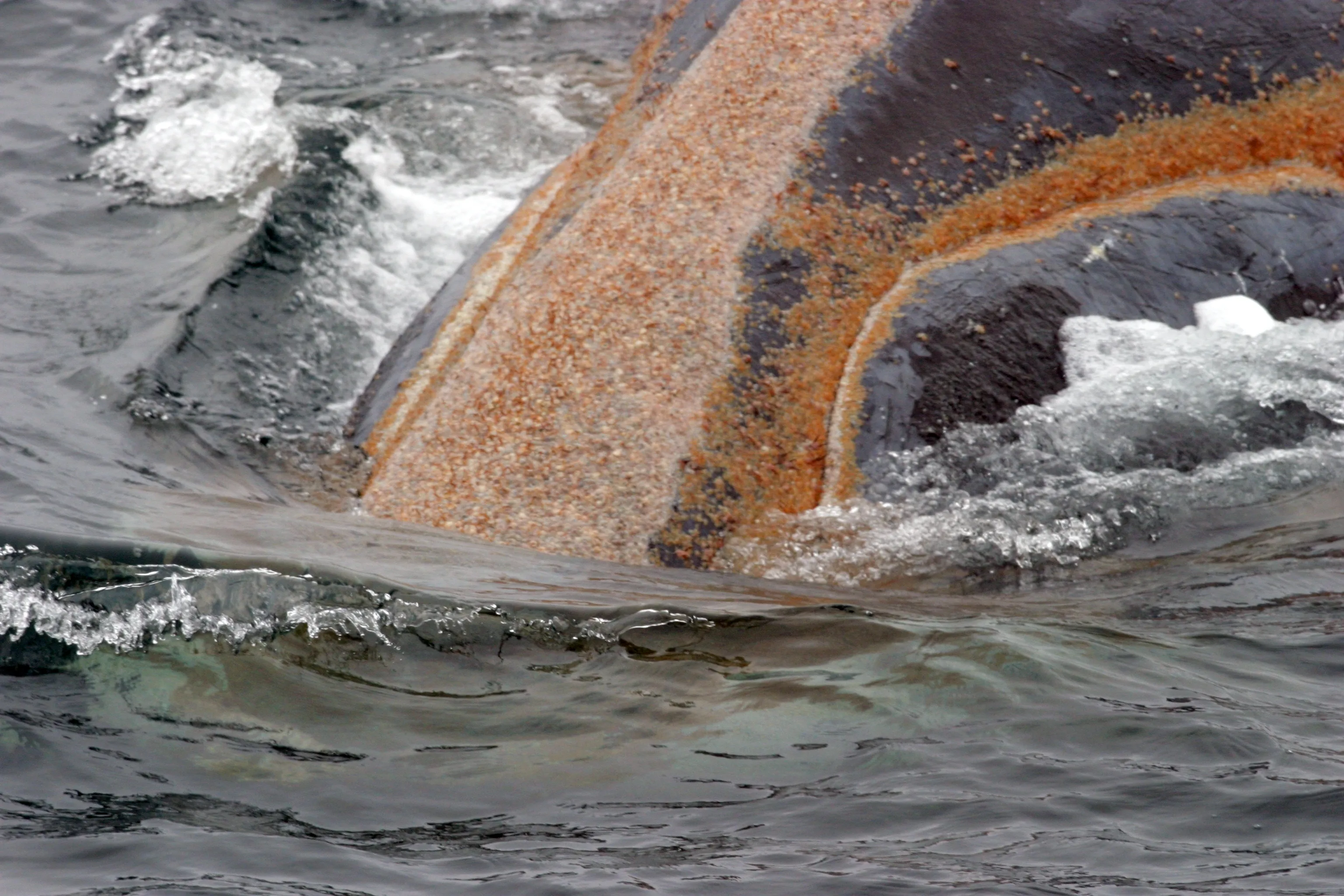
Its head is covered in callosities: patches of rough skin whitened by tiny crustaceans. Their pattern is unique to each whale, like a fingerprint. Using it, researchers at the New England Aquarium maintain a photo catalogue of more than 800 whales, living and dead, with records going back to 1935.
It is a baleen whale. It swims slowly with its mouth open, at or just below the surface, filtering zooplankton — especially tiny crustaceans called copepods. It lives for at least 50 years. A female has her first calf at around ten years old, after a pregnancy of about a year, and the newborn is already more than four metres long.
Every winter, some females head south to give birth off Georgia and Florida. For the rest of the year, the whales move north to feed: Cape Cod Bay, the Bay of Fundy, the Scotian Shelf and the Gulf of St. Lawrence.
Did you know? Every known right whale has a catalogue number, and many have names. In 2025, a female called Monarch was spotted with her calf in Cape Cod Bay, far from the usual calving grounds.
Why it is endangered
This whale was hunted heavily in the western North Atlantic from the early 1500s until the 1920s. It has been protected from whaling since 1935, but it never really recovered.
Today, its two main causes of death are human:
- Fishing gear. More than 86% of right whales have been entangled in ropes at least once, some as many as nine times. Ropes can injure them, exhaust them or stop them from feeding.
- Collisions with ships. Because it feeds close to the surface, the right whale is often hit by vessels.
In 2017, the situation became critical in Canada: 12 right whales were found dead in the Gulf of St. Lawrence between June and September, and five more in US waters. Necropsies pointed to ship strikes and entanglements. The population fell to 358 animals in 2020. Climate change adds further pressure on an already fragile population.
What is being done to save it
Since 2017, Canada has put protection measures in place in the Gulf of St. Lawrence every year. Since 2020, vessels 13 metres and longer must slow to 10 knots across more than 65,000 km² of the Gulf, with fines of up to $250,000. A voluntary slowdown is also requested in the Cabot Strait, and shipping zones slow down whenever a whale is detected there. Fishing areas close as soon as a whale is detected. Since 2026, harvesters are also notified of detections that don’t trigger a closure, along with best-practice advice. Harvesters are trialling whale-safe gear, such as ropes that break under strain, and must mark their gear and report any they lose. In February 2026, Canada published a national strategy to roll out this gear more widely.
In the United States, specialised teams free entangled whales, and NOAA is backing technical solutions to reduce collisions and entanglements.
These efforts are starting to pay off. The population was estimated at 384 whales in 2024, up 2.1% on the previous year. In 2025, no deaths were detected and 11 calves were born, four of them to first-time mothers. None of these calves is known to have died, whereas in 2024 five of the twenty calves born did not survive. And the gap between births for 2025’s mothers was the shortest since 2013. NOAA describes itself as “cautiously optimistic”. But experts stress that this is no time to ease off. In 2024, four breeding females died — a huge loss for such a small population.
How you can help
Sauvons les animaux does not collect donations. These recognised organisations work for the right whale:
- New England Aquarium: sponsor an identified whale and support population monitoring. Sponsor a right whale
- WWF-Canada supports research and protection measures in the Gulf of St. Lawrence. Donate to WWF-Canada
And in everyday life:
- If you go boating on the St. Lawrence or the Atlantic coast, respect slow-down zones, keep your distance from whales and report sightings, for example with the Whale Alert app.
- Never leave rope or netting in the water, and report any abandoned fishing gear.
- Spread the word: this whale lives in Canadian waters too.
Support an organization
We do not collect donations. These trusted organizations work directly for this species:
-
New England Aquarium — right whale sponsorship
The Boston aquarium's research team keeps the species' photo catalogue. Sponsoring a whale helps fund population monitoring.
Symbolic adoption — New England Aquarium — right whale sponsorship (external site, opens in a new tab) -
WWF-Canada
Supports research on right whales in the Gulf of St. Lawrence and works with governments and industry on protection measures.
Donate — WWF-Canada (external site, opens in a new tab)
In pictures
Use the left and right arrow keys to browse the photos.
-
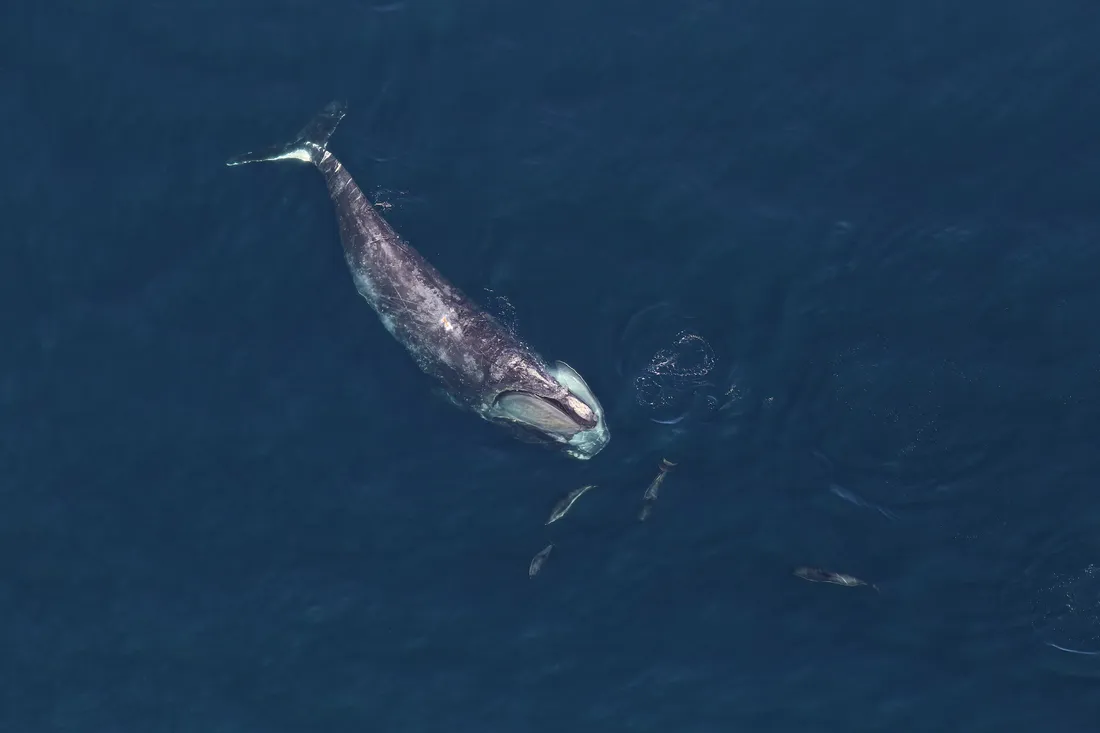
The whale known as "Scoop", photographed in Stellwagen Bank National Marine Sanctuary (Massachusetts) in 2016. Photo: National Marine Sanctuaries (NOAA), Public domain (source) -
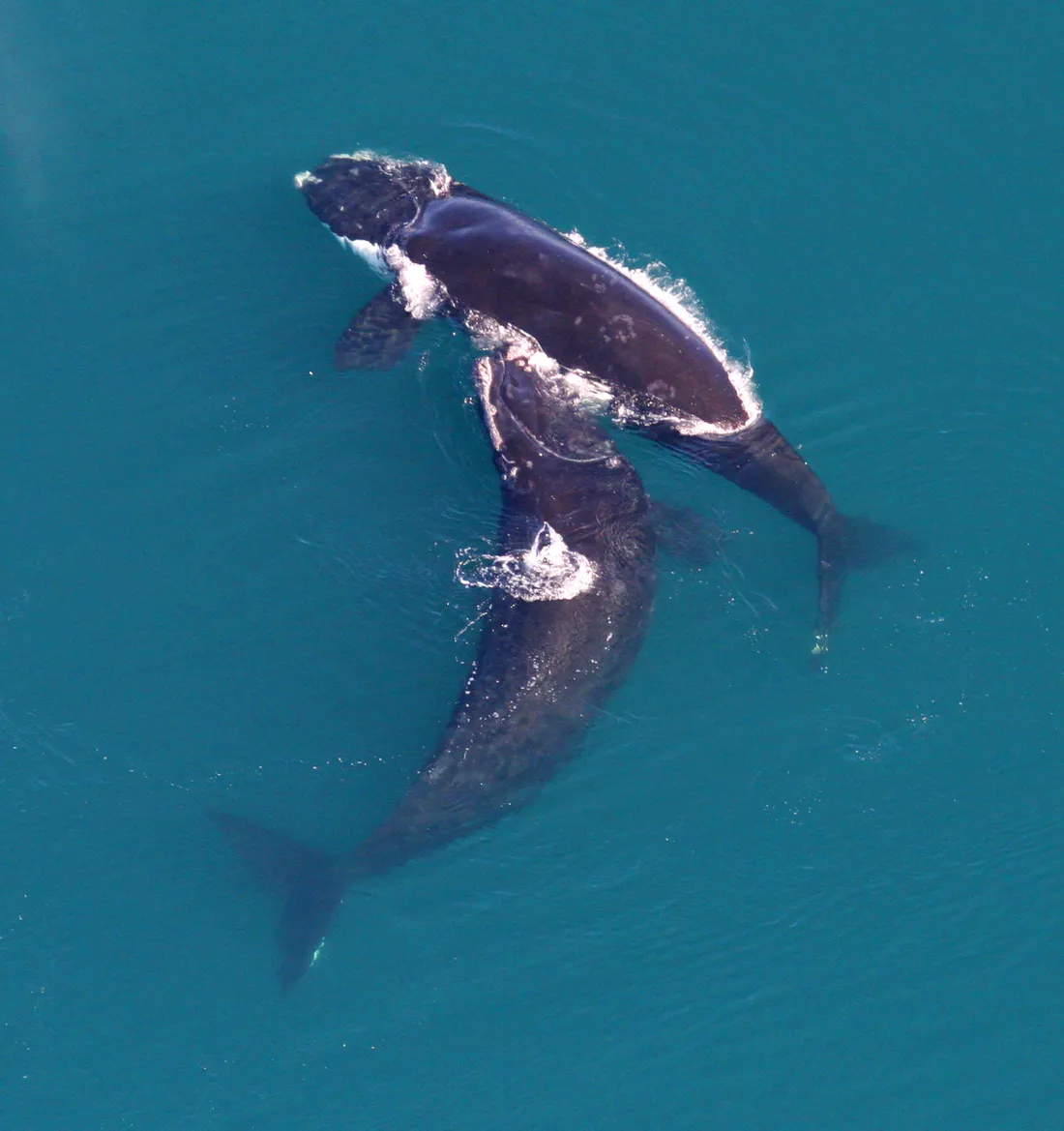
Two right whales near Gray's Reef National Marine Sanctuary, off Georgia, where they come to give birth. Photo: National Marine Sanctuaries (NOAA), Public domain (source) -
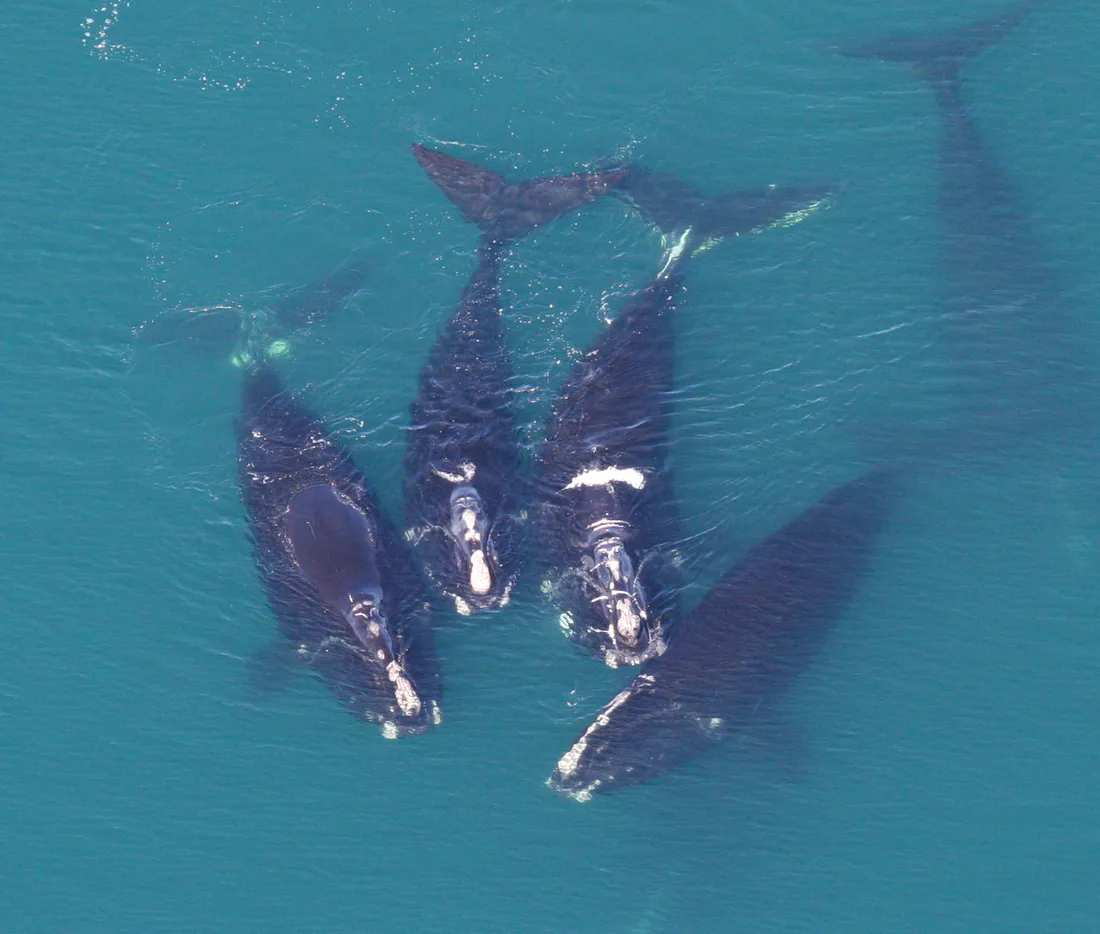
A group of right whales off Georgia in 2016 — they communicate with sounds underwater. Photo: National Marine Sanctuaries (NOAA), Public domain (source) -
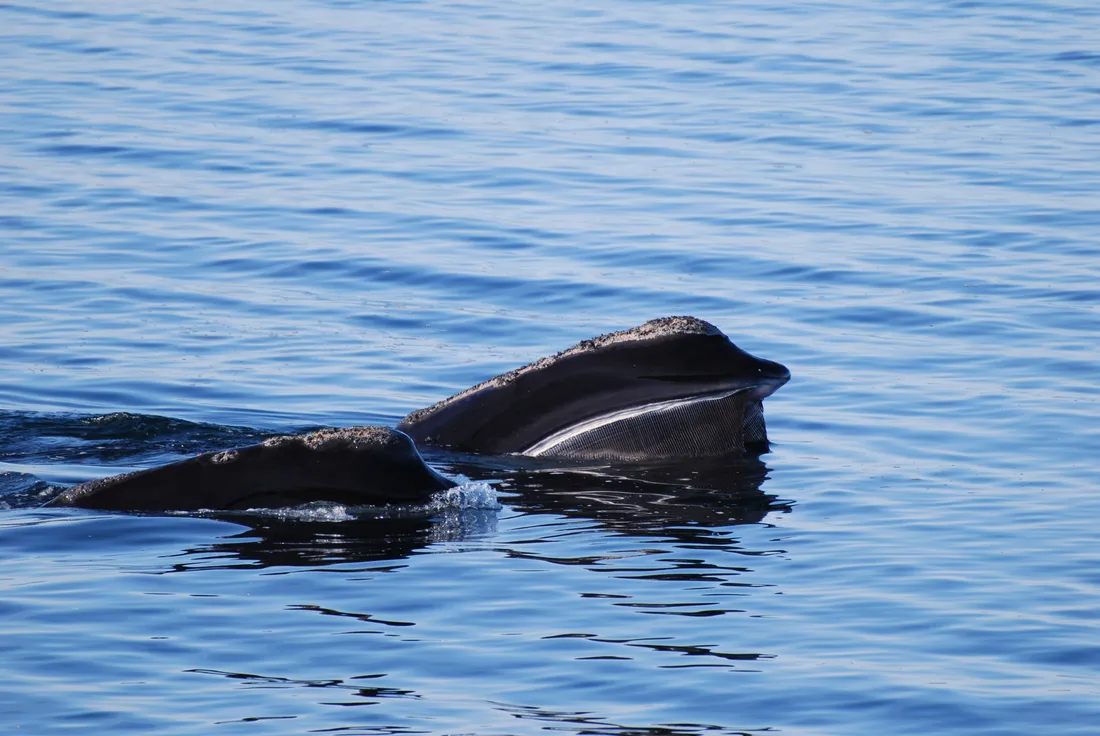
A right whale feeding at the surface in Stellwagen Bank sanctuary, 2010. Photo: National Marine Sanctuaries (NOAA), Public domain (source)


Share this page
Sources
- Eubalaena glacialis — Red List assessment (2020), IUCN, accessed .
- Protections for Right Whales Remain Essential to Continue Population's Gradual Increase (21 October 2025), New England Aquarium, accessed .
- 2025 Annual Report Card, North Atlantic Right Whale Consortium, accessed .
- Canada continues strong protections for endangered North Atlantic right whales (26 March 2026), Fisheries and Oceans Canada, accessed .
- North Atlantic right whales, WWF-Canada, accessed .
- North Atlantic right whale — species profile, Massachusetts Division of Marine Fisheries, accessed .
- Baleine noire — species profile, Government of Québec, accessed .
- All About North Atlantic Right Whale Research at the New England Aquarium, New England Aquarium, accessed .
Photo credits
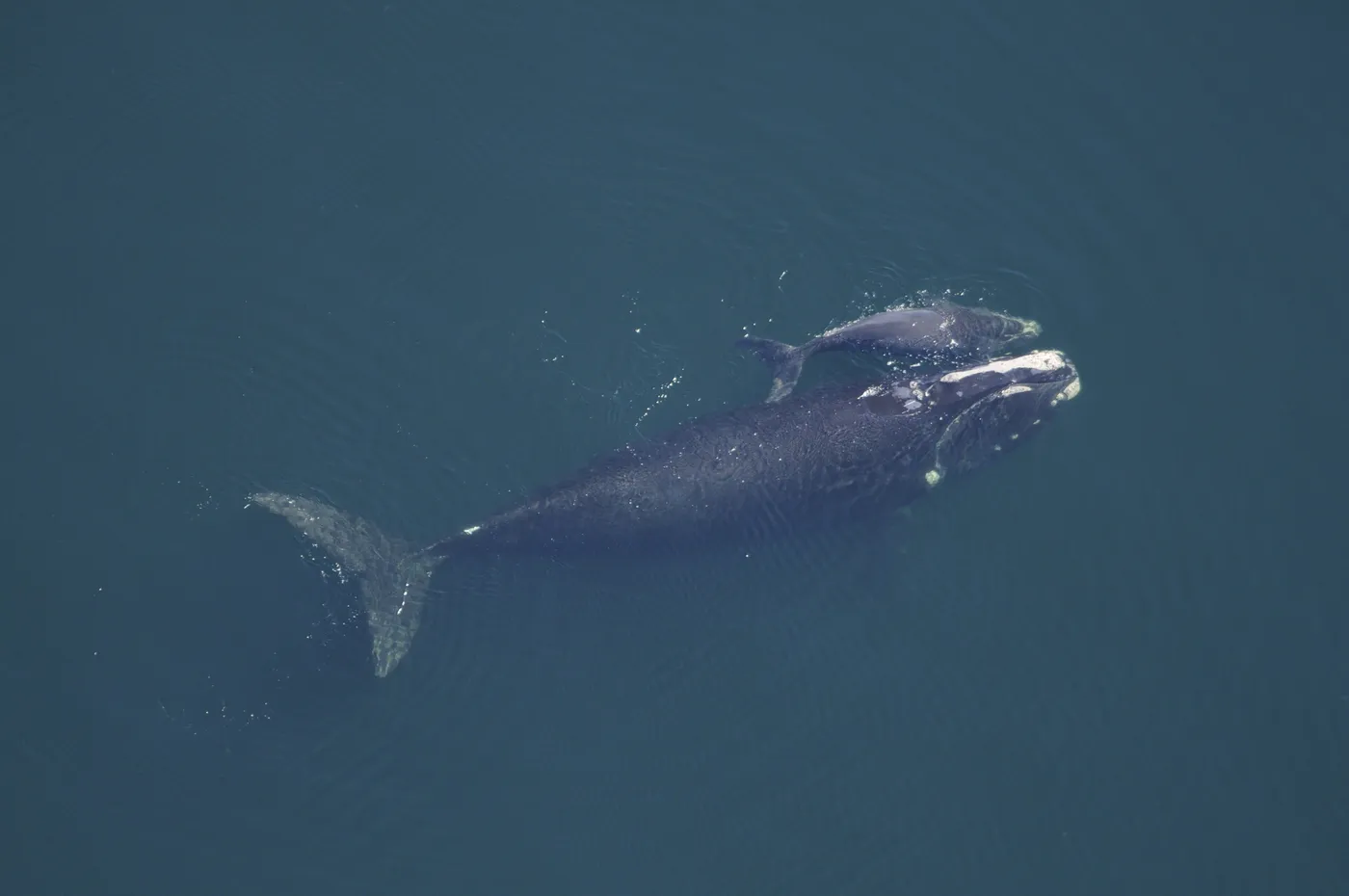
- A mother and calf photographed from the air in 2010. Photo: NOAA Photo Library, Public domain (source)
- Callosities — patches of rough skin — are colonised by tiny crustaceans known as whale lice. Their pattern makes each whale identifiable. Photo: NOAA Photo Library, Public domain (source)
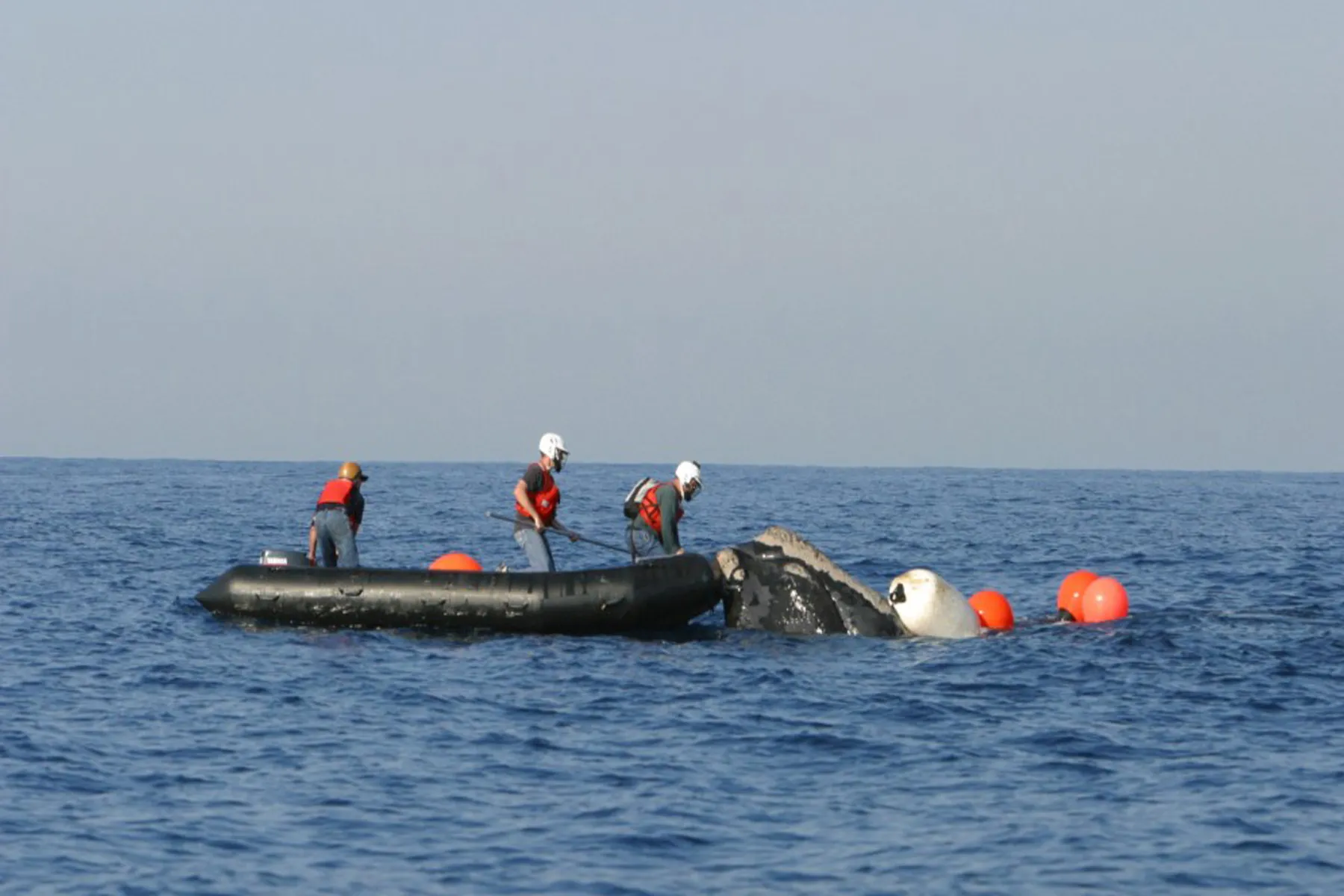
- Off Jacksonville, Florida, in 2008, a team from NOAA and its partners frees a right whale tangled in fishing gear. Photo: NOAA Photo Library, Public domain (source)
- The whale known as "Scoop", photographed in Stellwagen Bank National Marine Sanctuary (Massachusetts) in 2016. Photo: National Marine Sanctuaries (NOAA), Public domain (source)
- Two right whales near Gray's Reef National Marine Sanctuary, off Georgia, where they come to give birth. Photo: National Marine Sanctuaries (NOAA), Public domain (source)
- A group of right whales off Georgia in 2016 — they communicate with sounds underwater. Photo: National Marine Sanctuaries (NOAA), Public domain (source)
- A right whale feeding at the surface in Stellwagen Bank sanctuary, 2010. Photo: National Marine Sanctuaries (NOAA), Public domain (source)


Updated on
Discover other species
-
Critically Endangered Reptile
Ploughshare tortoise (angonoka)
Astrochelys yniphora
Population: 50–100 (2025)
-
-